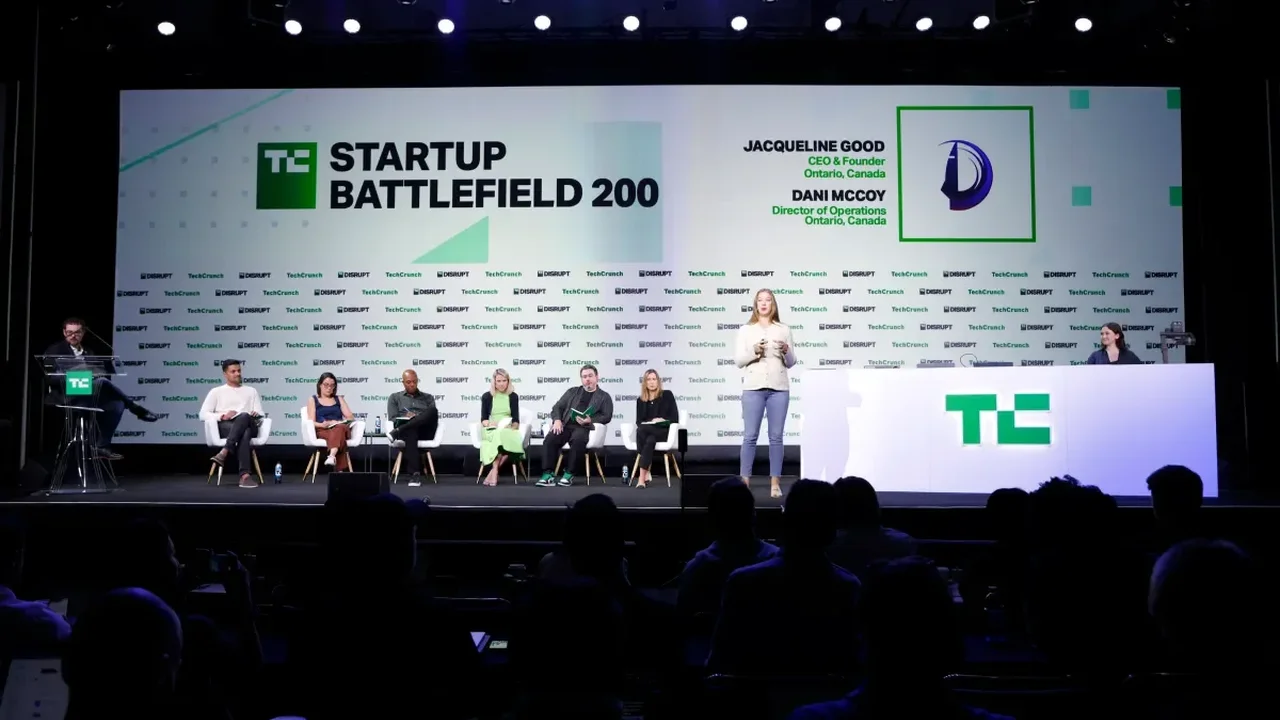
Nine early-stage South Korean companies pitched at DETO 2026 in Seoul, seeking a chance to join the Startup Battlefield 200 at Disrupt 2027. Their technologies span healthcare, energy, fintech, semiconductors, robotics, education and artificial intelligence, with each startup pursuing international growth. Voinosis won the pitch competition.
Healthcare, energy and identity technology
Voinosis is developing an AI tool that assesses speech patterns--including pitch, pauses and rhythm--for signs of changes in brain health. The company says a voice check takes under five minutes and that a study of 146 participants showed 88% accuracy in screening for potential cognitive issues.
Seoul-based Awesome Lab's ThermoFlux system uses water electrolysis and ionization to generate heat for buildings, water systems and industrial processes. The company says it can help reduce energy use and emissions. Crosshub's IDBlock platform combines identity verification with payment services, using self-sovereign identity and zero-knowledge proofs to help people verify themselves abroad while limiting personal-data sharing.
Robotics, semiconductors and learning
DeepFusion AI combines radar, lidar and radio-frequency sensors in a customizable imaging system for autonomous mobility, robotics and maritime uses. EFLOW makes compact, high-torque motors and actuators for applications such as robots, drones and satellites. Riibotics focuses on making warehouse robot deployment faster by streamlining setup, mapping and system integration.
Medical-device company Otiton Medical offers tools for temperature measurement and ear examination; it says its AI was trained on about 55,000 eardrum images. Ulsan-based Ternell is developing T-SRAM, a memory design with a third data state. The startup reports that tests on 28-nanometer chips showed increased memory capacity per area and lower energy use for data access compared with conventional SRAM.
Edtech startup Testbank is building Solve, an app that turns printed learning materials into interactive digital pages, where users can enter answers and receive automated grading.
The group's varied approaches reflect how emerging technologies can address needs across daily life and industry. Their next steps may help shape how Korean innovation reaches global markets.