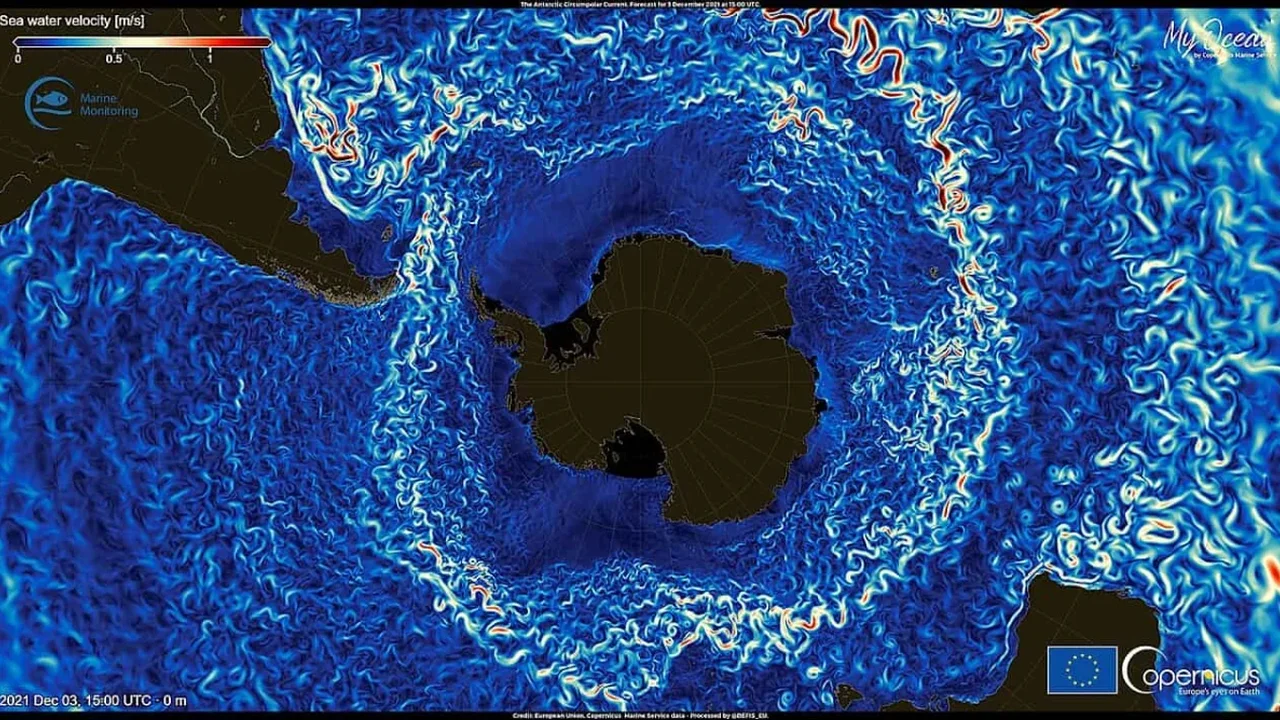
Approximately 34 million years ago, Earth underwent a significant transformation as it transitioned into the Oligocene epoch. This era marked a shift from a warm greenhouse environment to a cooler climate characterized by the expansion of polar ice sheets. During this time, the oceanic pathways between Antarctica, Australia, and South America widened, facilitating the emergence of the Antarctic Circumpolar Current (ACC) alongside the formation of the Antarctic Ice Sheet.
At that time, atmospheric CO2 levels reached around 600 ppm, a concentration that has not been replicated since. However, projections suggest that future climate scenarios could exceed this level by the century's end. Hanna Knahl, a climate modeller at the Alfred Wegener Institute, Helmholtz Centre for Polar and Marine Research (AWI), emphasizes the importance of studying past climates to inform predictions about future conditions. "Our research illustrates that the early stages of the ACC had a markedly different impact on climate compared to its current state," she notes.
Unraveling the Origins of the Antarctic Circumpolar Current
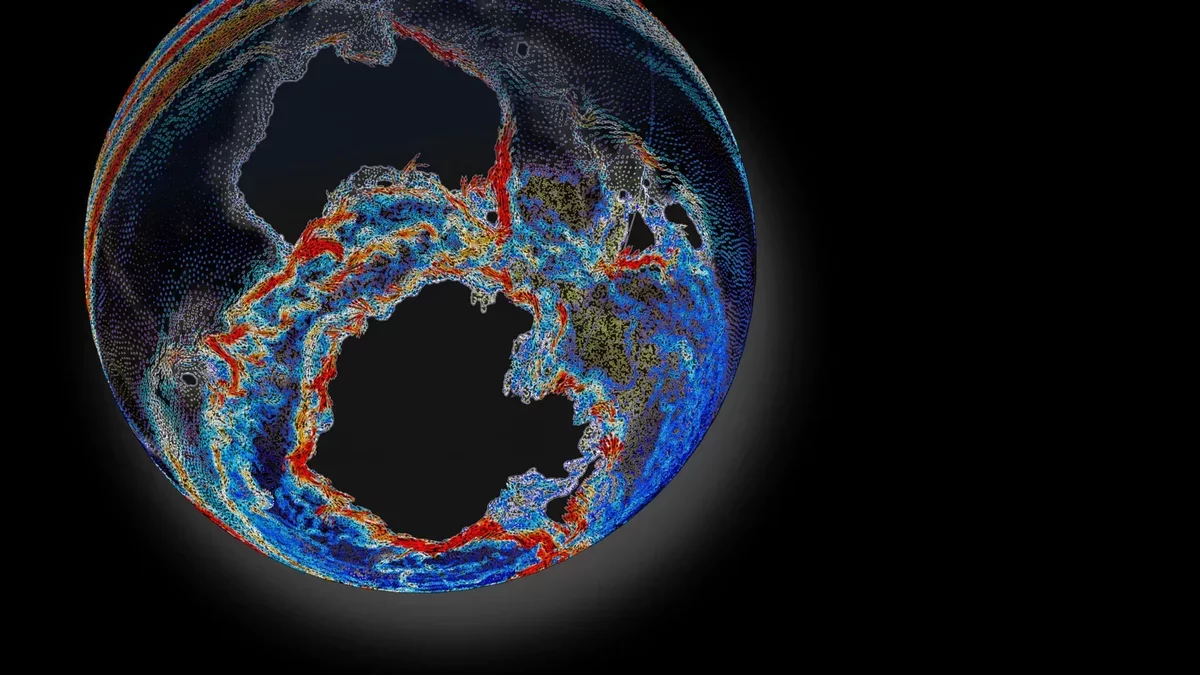
To investigate the ACC's formation, Knahl and her team conducted advanced climate simulations that reflected the geography of Earth 33.5 million years ago, when Australia and South America were much closer to Antarctica. By integrating these simulations with an Antarctic Ice Sheet model from a recent study, they examined the interactions among ocean, atmosphere, and land systems to trace the evolution of ocean currents.
The results were juxtaposed with geological data from the same epoch, allowing researchers to validate their findings against real-world evidence.
The Crucial Influence of Winds and Continental Movements
The study underscores the pivotal role of the Tasman Gateway, the seaway between Antarctica and Australia. Knahl explains, "Our simulations confirm that the current's full development was contingent on Australia moving further away from Antarctica, enabling strong westerly winds to flow directly through the Tasman Gateway."
Interestingly, the Southern Ocean during this formative period appeared quite different. Although ocean passages were already established, the current had not yet formed a continuous loop. Instead, vigorous flows emerged in the Atlantic and Indian regions, while the Pacific remained relatively tranquil.
Advanced Simulations Offer Fresh Perspectives
Combining climate and ice sheet models represents a novel and intricate approach, enhancing scientists' ability to capture the interactions across various Earth systems. Collaborating with international partners, including the Australian Centre of Excellence in Antarctic Science, the AWI team is pioneering this high-resolution modeling to glean insights into the Earth's climatic past.
The Significance of the Antarctic Current for Modern Climate
This reconstruction of the ACC's formation reveals how historical shifts in ocean circulation have profoundly influenced Earth's climate system. Dr. Johann Klages from AWI states, "Understanding the ACC's formation is essential, as it has significantly contributed to carbon absorption by the ocean, thereby reducing greenhouse gas concentrations in the atmosphere and paving the way for the cooler Cenozoic Ice Age." These insights are vital for interpreting contemporary changes in Southern Ocean circulation and their implications for our climate future.
This research not only enhances our understanding of past climate dynamics but also equips us with the knowledge to better anticipate future environmental shifts.