Every time you engage in activities like hitting a tennis ball or catching keys, your brain effortlessly solves intricate physics problems in mere milliseconds. This remarkable feat typically requires the immense computational power of a supercomputer.
Researchers Brad Theilman and James Aimone from Sandia National Laboratories have made significant strides in demonstrating that neuromorphic hardware can effectively merge the efficiency of human cognition with the energy demands of traditional computing systems. Their work shows that chips designed to replicate the brain's sparse and asynchronous communication can solve complex partial differential equations (PDEs), which are essential for scientific simulations.
By translating structural mechanics into the framework of spiking neurons, the team has unlocked a pathway to energy-efficient supercomputing that resembles a living brain rather than a conventional processor.
The Challenge of Simulating Physical Phenomena
Scientists rely on PDEs for various applications, from hurricane forecasting to nuclear weapon testing.
To tackle these equations, engineers typically employ the Finite Element Method (FEM), which dissects complex shapes, like an airplane wing, into millions of simpler geometric elements. The computation for these elements demands substantial supercomputing resources, consuming vast amounts of electricity and generating significant heat.
This high energy consumption is largely due to the current architecture of computers. Traditional chips expend considerable energy transferring data between memory and processors, whereas the brain integrates memory and computation across billions of neurons.
"We are just beginning to develop computational systems that can mimic intelligent behavior, but they do not resemble the brain and require excessive resources," notes Brad Theilman, a computational neuroscientist at Sandia.
The NeuroFEM Innovation
Theilman and Aimone did not attempt to train a neural network to predict physics problems like many AI models. Instead, they discovered a method to directly translate the mathematics of FEM into a Spiking Neural Network (SNN).
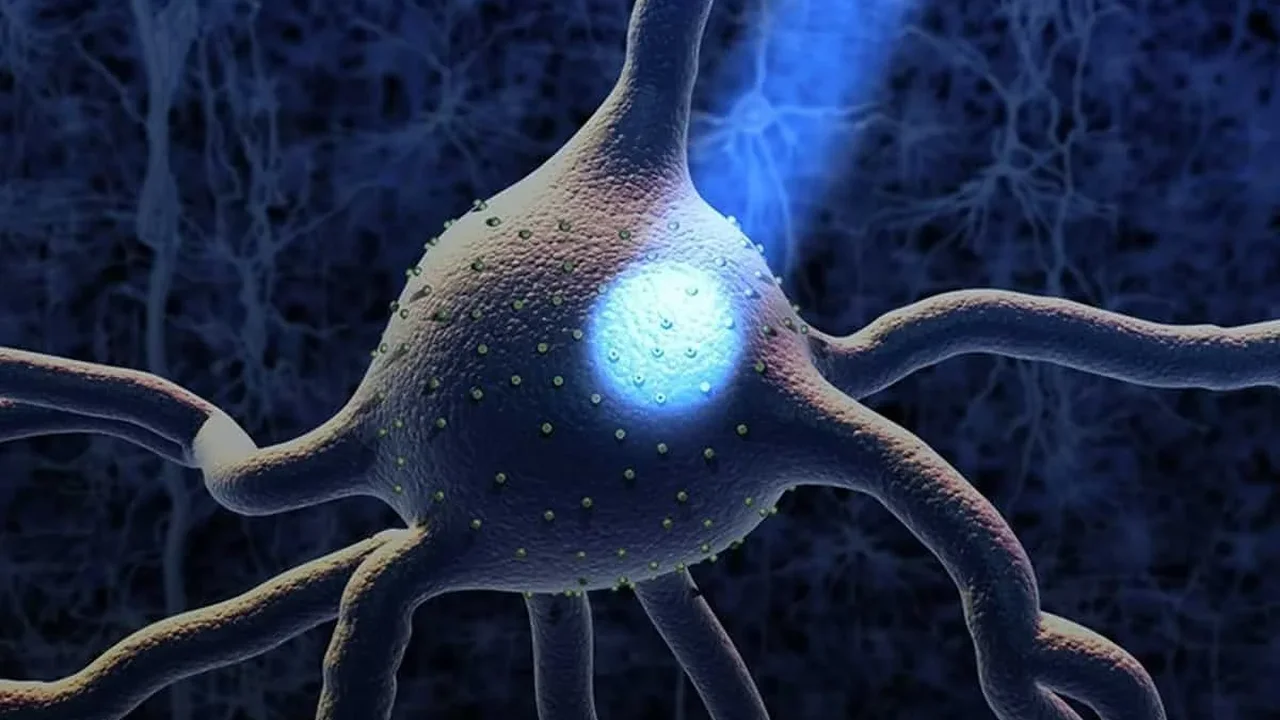
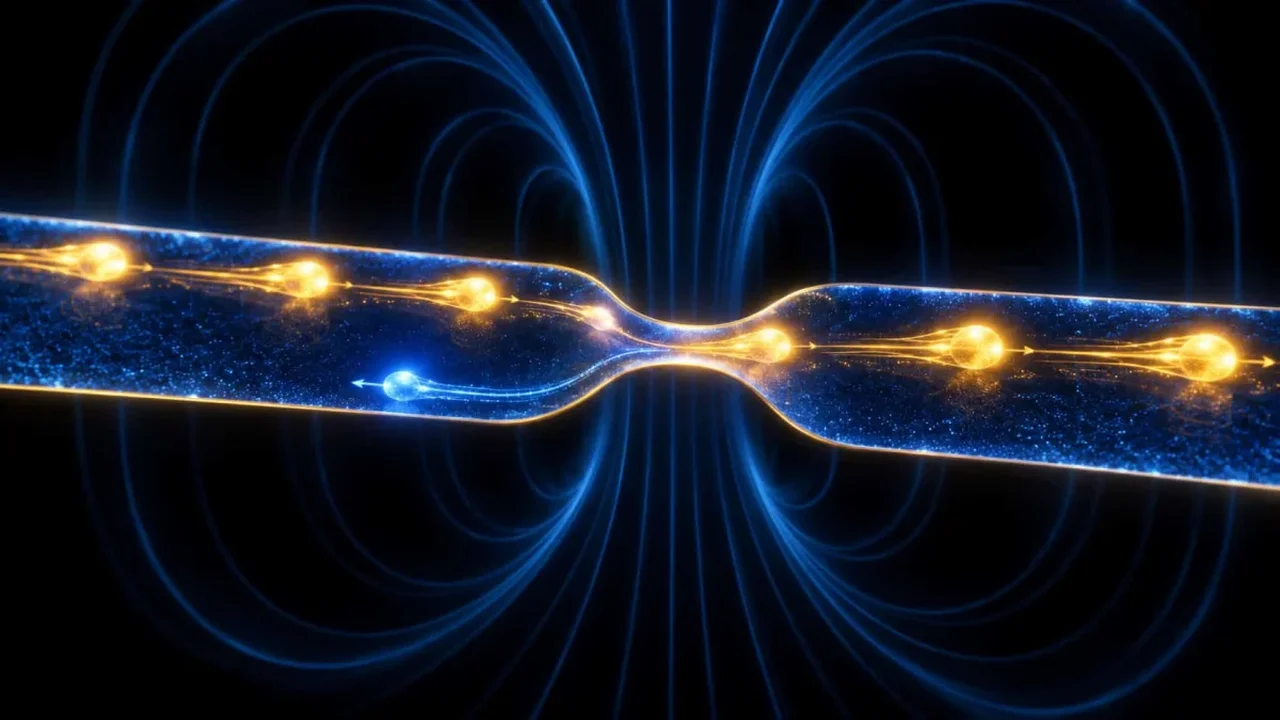
This innovative approach, termed NeuroFEM, maps the physical object's mesh onto a neuron mesh. Instead of transferring complex numbers, neurons communicate through "spikes"--binary electrical pulses that mimic biological neural activity.
The process resembles a microscopic tug-of-war, where a group of neurons receives input and spikes to convey a value. Half of the neurons signal positively, while the other half signals negatively. Through rapid, asynchronous communication, the network converges on a balance point, which represents the solution to the equation.
"You can solve real physics problems using brain-like computation," Aimone states. "This is unexpected, as conventional intuition often leads us astray."
Scalable Silicon Solutions
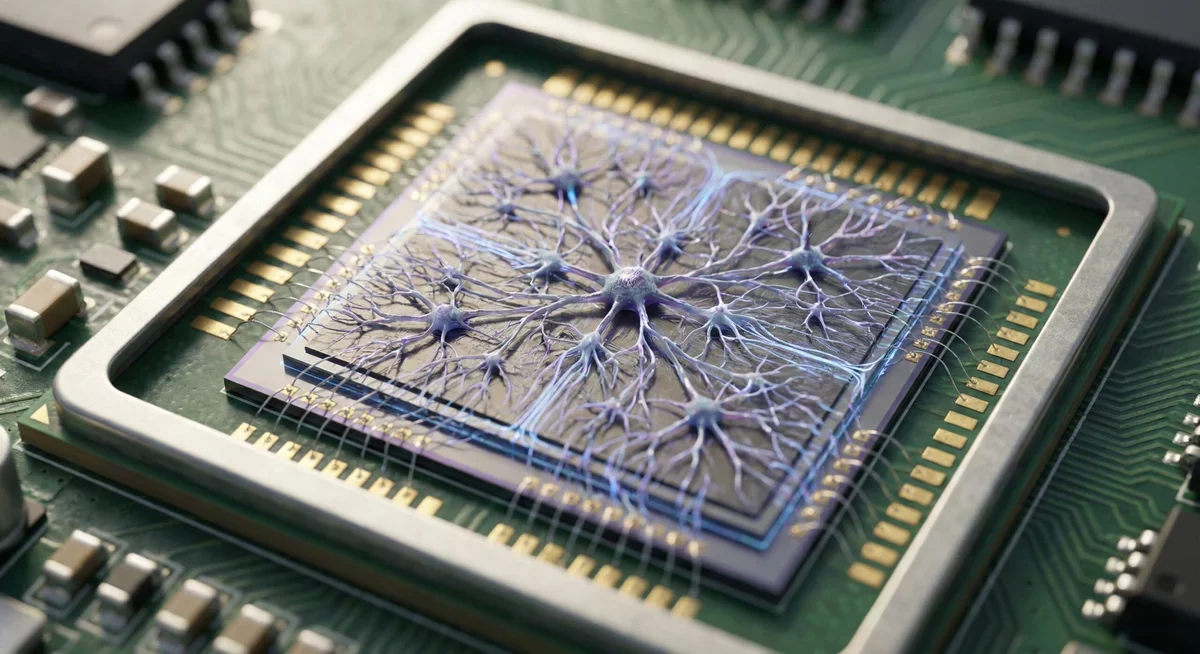
To validate their theory, the researchers implemented their algorithm on Intel's Loihi 2, a state-of-the-art neuromorphic chip.
The results were impressively efficient, with the algorithm demonstrating "close to ideal scaling." Unlike traditional computing, where adding more processors often leads to diminishing returns, doubling the number of cores in NeuroFEM significantly reduced the time required to find solutions.
Moreover, the energy consumption to solve these problems was considerably lower than performing the same calculations on standard CPUs, and this energy efficiency is expected to increase with larger, more complex problems.
From Sports to National Security
Why do brain-inspired chips excel at solving physics problems? The answer lies in the brain's constant engagement with such computations.
"Consider any motor control task, like hitting a tennis ball or swinging a bat," explains Aimone. "These tasks involve sophisticated computations that our brains perform efficiently."
The algorithm used is based on a model of the brain's motor cortex, illustrating how the neural architecture evolved for arm movement is ideally suited for simulating the bending of a steel beam.
This breakthrough carries significant implications for the National Nuclear Security Administration (NNSA), which requires extensive simulations to maintain nuclear deterrence without detonating hydrogen bombs.
"Neuromorphic computing could substantially reduce energy consumption while maintaining robust computational performance," the researchers assert, allowing for larger and faster simulations with a smaller energy footprint.
The Concept of the "Neuromorphic Twin"
One of the most exciting prospects is the idea of the "neuromorphic twin."
These low-power chips could be embedded in physical structures, such as bridges or turbines, continuously simulating the forces acting on them in real-time. This would enable instant updates based on sensor data to predict potential structural failures before they occur.
The team has already demonstrated the capability of their network to manage complex 3D shapes, such as a hollow sphere under gravitational stress, proving its effectiveness in handling the complexities of the real world.
A major concern with modern AI is the "black box" problem, where the reasoning behind AI decisions remains opaque. NeuroFEM addresses this issue.
"Having established that we can integrate fundamental applied math algorithms into neuromorphic systems raises the question of whether there are corresponding formulations for even more advanced techniques," Theilman queries.
As development progresses, the researchers remain optimistic. "We are on the brink of addressing scientific inquiries while also providing solutions to real-world problems," Theilman concluded.
The findings were published in the journal Nature Machine Intelligence.