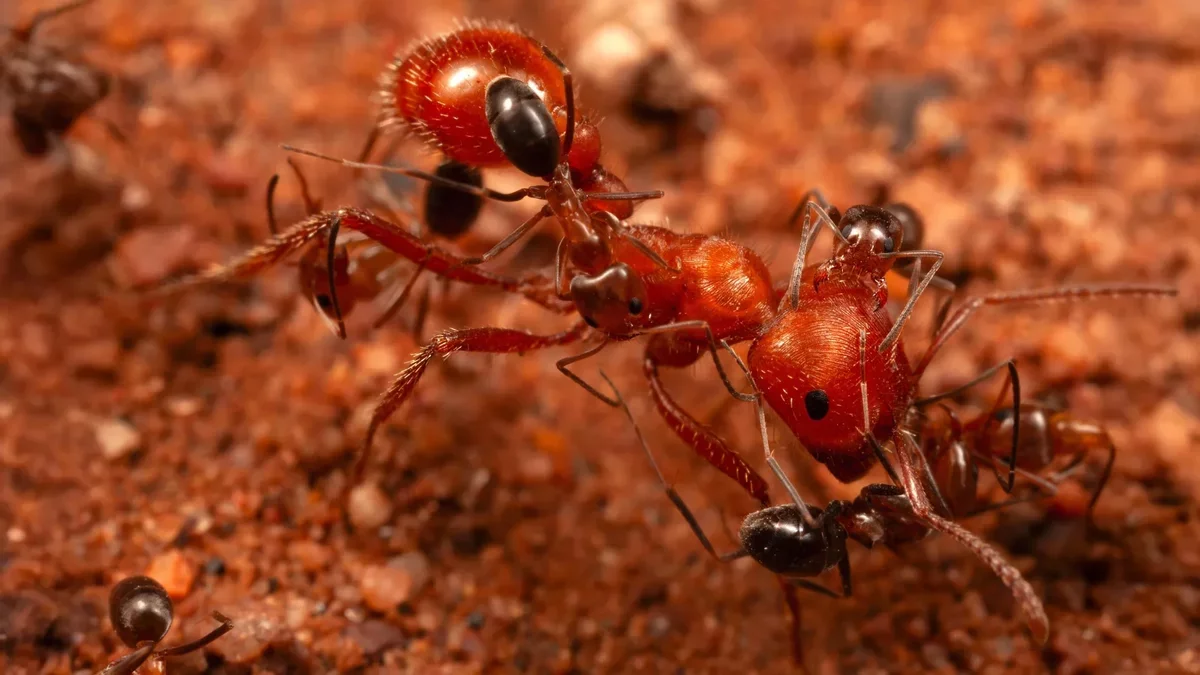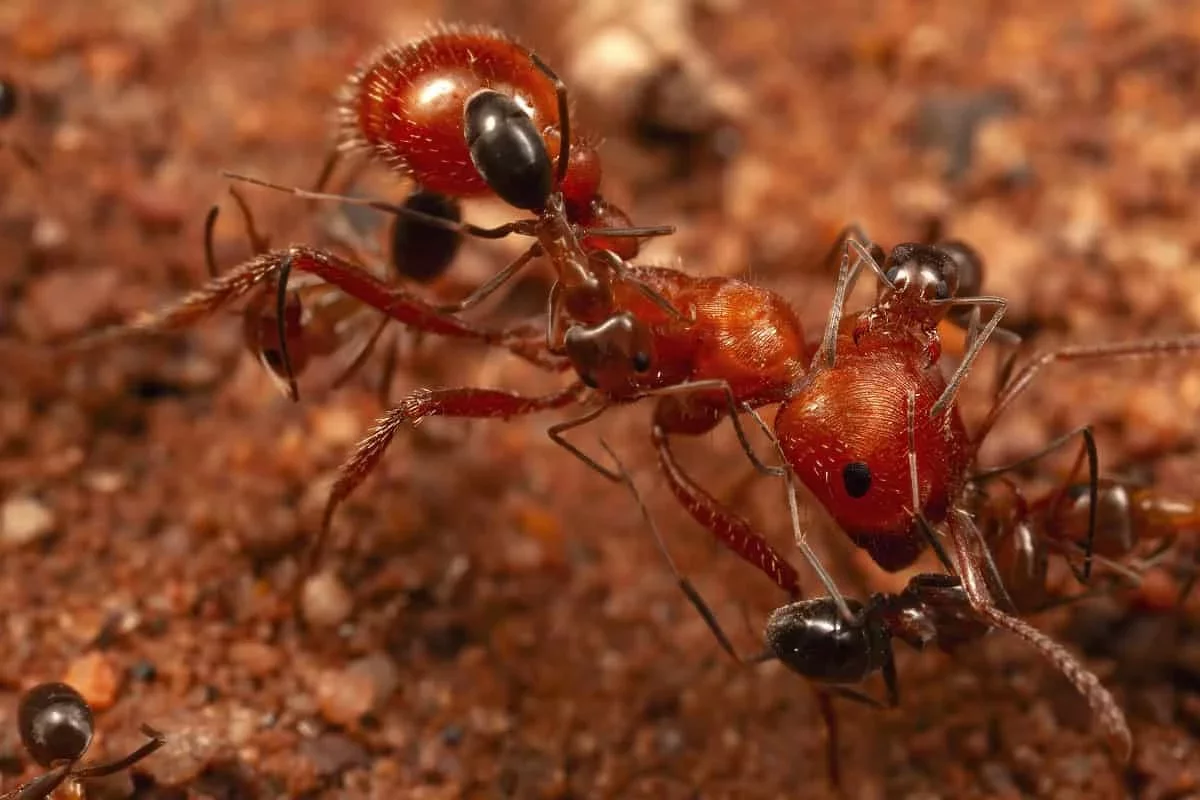
In a fascinating observation made by biologist Mark Moffett in 2006, a peculiar interaction between two species of ants was documented. While studying in Arizona, he noticed that larger harvester ants would remain motionless near the nests of smaller cone ants, seemingly inviting them for a grooming session.
This behavior, which appears to be a form of mutualism, involves the smaller cone ants climbing onto the larger harvester ants and meticulously cleaning them, even reaching their eyes. Moffett initially interpreted this as a potential display of aggression, but further observation revealed that the larger ants actively sought out these cleaning sessions.
The Ant Grooming Ritual
Despite the behavior being observed two decades ago, Moffett has only recently published his findings. He documented at least 90 instances of this grooming, noting the remarkable calmness exhibited by the harvester ants, which allowed multiple cone ants to swarm over them without any sign of distress. The cleaning sessions typically conclude when the harvester ant decides it has had enough, often shaking off its tiny caretakers.
To explore the nature of this interaction, Moffett conducted experiments with deceased harvester ants, which the cone ants showed no interest in grooming. This suggests that the behavior is not arbitrary but requires a living participant.
Understanding the Motivation
The underlying reasons for this unique behavior remain a mystery. Moffett speculates it may represent a symbiotic relationship, where the larger ants benefit from grooming while the smaller ants enjoy a meal of parasites and debris. Another theory posits that this interaction could facilitate social bonding, allowing the cone ants to blend in with the harvester colony through pheromone exchange, thereby reducing the risk of aggression.
This remarkable example of cooperation among insects highlights the complexity of their social interactions. Moffett emphasizes that there are still many discoveries waiting to be made in nature, often requiring us to pay attention to the smaller details, such as the activities of ants.
The findings were published in the journal Ecology and Evolution, illustrating the potential for new understandings of insect behavior and cooperation.