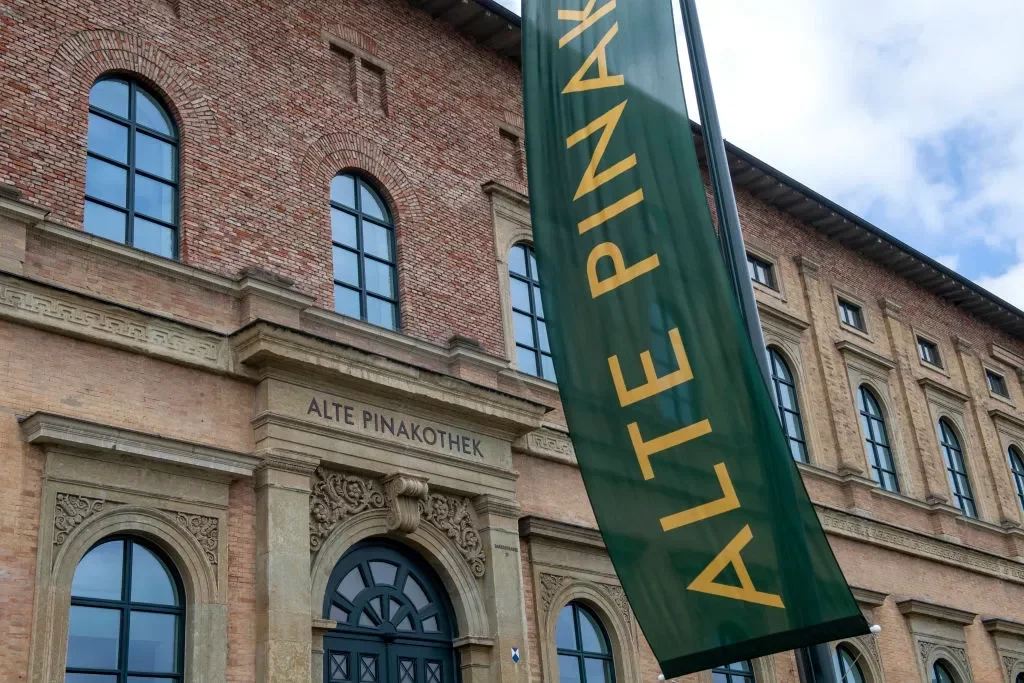
The Pinakothek museums in Munich have taken a significant step by returning a painting by the renowned German artist Lesser Ury. This artwork, titled Interior with Children (The Siblings), was auctioned under duress during the Nazi regime. This decision marks a renewed commitment to the restitution of art looted during this dark chapter in history, a move that has been long-awaited within Bavaria's museum sector, which has faced criticism for its slow progress in addressing such matters.
Lesser Ury, a Jewish Impressionist who passed away in 1931, is celebrated for his evocative portrayals of urban life in Berlin and Bavaria, capturing scenes from bustling cafés to rain-soaked streets.
The painting originally belonged to Curt Goldschmidt, a Jewish banker from Berlin. The economic turmoil instigated by the Nazi Party led to the collapse of his family bank, forcing the Goldschmidts to auction their possessions, including Ury's artwork. It is estimated that the painting sold for about 800 Reichsmarks (equivalent to roughly $4,000 today), a stark contrast to the recent auction prices for Ury's works, which can reach between $40,000 and $100,000.
Goldschmidt fled to Paris in 1937, where he lived in hiding until his death in 1947. His story reflects the fate of many Jewish collectors who lost not only their fortunes but also their cherished art collections due to Nazi persecution. As Bavaria's Minister of Art, Markus Blume, noted, "Curt Goldschmidt's fate is representative of that of many Jewish collectors and patrons."
While it remains uncertain who purchased the painting at the auction in the 1930s, its provenance indicates it was later identified as coming from "non-Aryan ownership" when it reappeared at a Cologne auction house in 1940.
The Bavarian State Painting Collections acquired the artwork in 1972. Over the years, the institution has intensified its efforts to investigate the provenance of its pieces, particularly those with questionable histories. Anton Biebl, the institution's director, emphasized the importance of the painting as not only a significant example of Ury's oeuvre but also as a reflection of the history of Jewish collectors in early modern Berlin.
"The return acknowledges the painting's dual Jewish provenance - from its creator to its collectors and its loss as a result of Nazi persecution," Biebl stated, highlighting the ongoing commitment to rectifying historical injustices through the return of looted art.