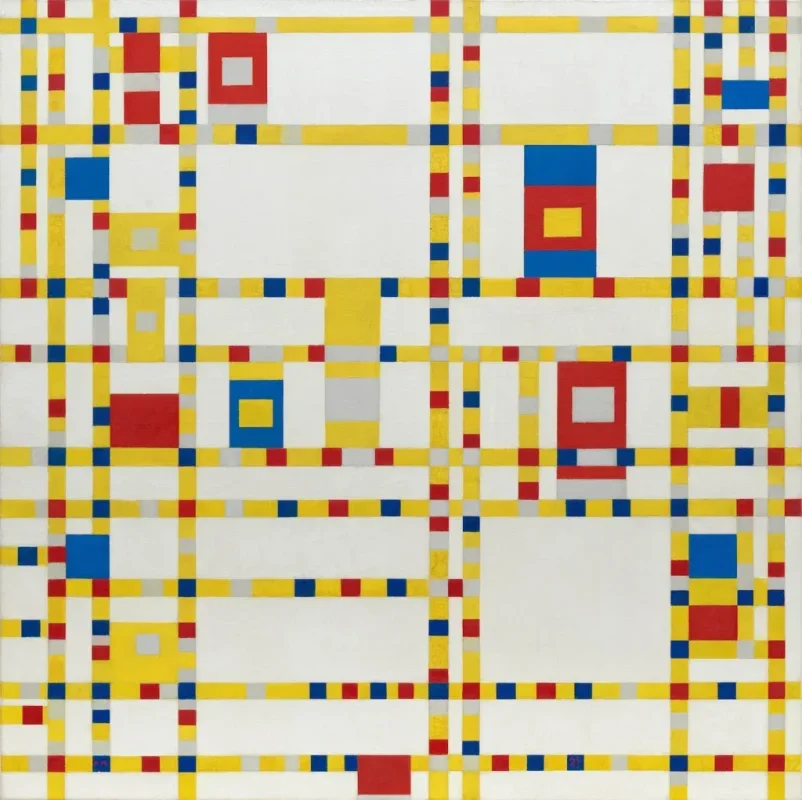
The Museum of Modern Art (MoMA) is set to unveil a significant exhibition focused on the renowned Dutch modernist Piet Mondrian and his transformative years in New York City. This exhibition will specifically highlight how the vibrant boogie-woogie music scene of the city influenced his artistic creations. Featuring 30 of Mondrian's paintings that were either created or completed from 1940, the year he moved to New York, until his passing in 1944, the show promises to offer a fresh perspective on his work.
As a trailblazer in 20th-century abstraction, Mondrian initially embraced figurative painting before co-founding the De Stijl art movement in 1917, aimed at promoting non-representational art. His journey took him to Paris in 1919, where he refined his theories on abstraction, ultimately leading to the iconic style characterized by rectangular blocks of primary colors framed by bold black lines.
Upon arriving in New York in 1940, Mondrian's artistic direction underwent a notable shift. He was captivated by jazz and the boogie-woogie genre, which was experiencing a revival. This vibrant atmosphere of New York catalyzed a new phase in his creativity, leading him to abandon the traditional black grid in favor of dynamic patterns resembling syncopated street maps. The exhibition will prominently feature two masterpieces: Broadway Boogie Woogie (1942-43), part of MoMA's collection, and Victory Boogie Woogie (1942-44), typically housed at the Kunstmuseum Den Haag.
Leah Dickerman, MoMA's director of research programs and co-curator of the exhibition, remarked, "These two fascinating journeys--Mondrian's and boogie-woogie's--are intertwined narratives of migration, diaspora, and reimagination, essential to our understanding of modernism in America." She expressed excitement about collaborating with the Kunstmuseum Den Haag to reunite these iconic works in the city that inspired them.
The exhibition, titled Mondrian Boogie Woogie, will be open to the public from March 21 to July 31, 2027, offering a unique opportunity to explore the intersection of music and visual art during a pivotal moment in history.