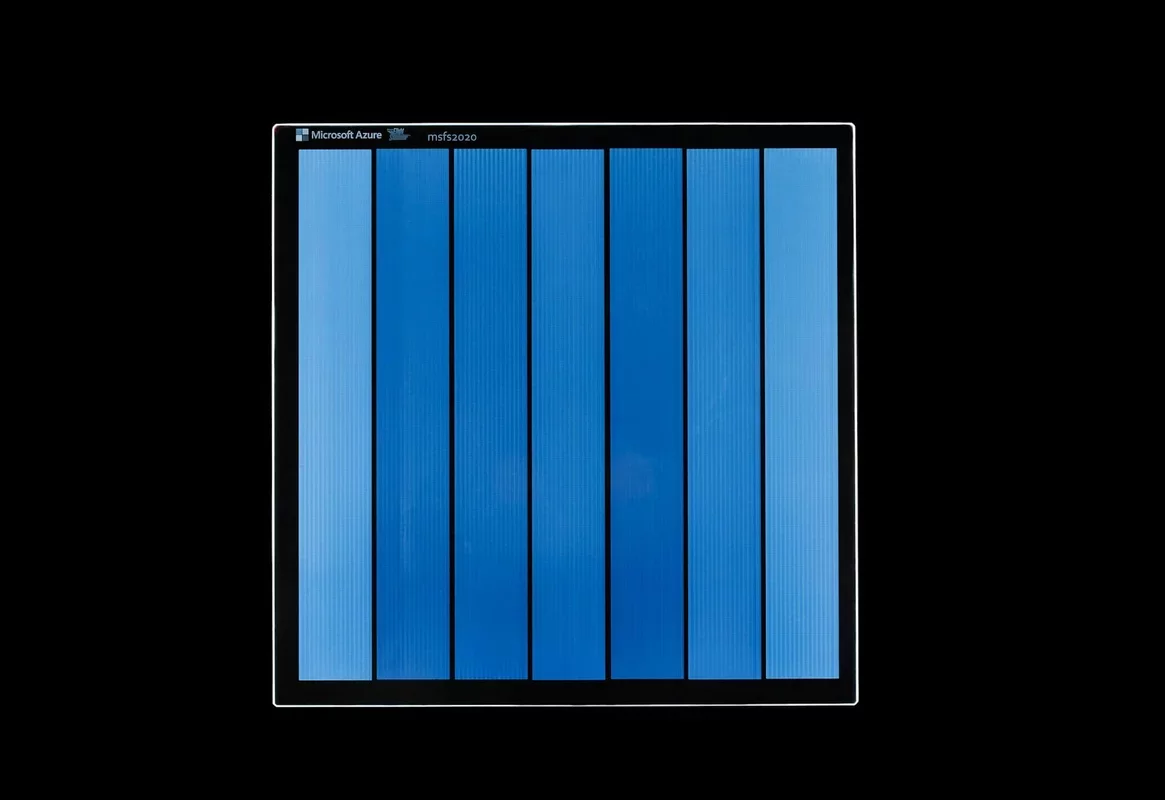
Researchers at Microsoft have unveiled a groundbreaking system named Silica, which transforms ordinary glass into a robust data storage medium. This innovative approach allows a small, palm-sized piece of glass to hold the equivalent of two million books, with a remarkable data retention capability of over 10,000 years.
Harnessing the Power of Light
The Silica system employs ultrashort laser pulses to encode information within glass. These laser bursts, lasting just femtoseconds (one quadrillionth of a second), create precise modifications in the glass's molecular structure. To illustrate the speed, ten femtoseconds is comparable to a minute in relation to the entire age of the universe.
Notably, these laser pulses can also generate even shorter bursts, known as attoseconds, which are instrumental in studying electron movements within atoms--a field recently honored with the Nobel Prize in Physics.
Transforming Glass into Data Storage
This cutting-edge technology allows for intricate changes deep within transparent materials. By tightly focusing laser light, researchers can create "voxels"--tiny three-dimensional units--within the glass, enabling data storage at unprecedented densities.
A Legacy of Research
The concept of volumetric data storage using lasers isn't entirely new. Pioneering work in the 1990s by Harvard University highlighted the potential for permanent data inscriptions in glass. More recently, researchers at the University of Southampton demonstrated the longevity of data stored in fused quartz glass, establishing a foundation for ultra-stable memory devices.
In 2024, a company called SPhotonix emerged, commercializing the idea of "5D glass nanostructuring." This concept even inspired a device in the latest Mission Impossible film, showcasing its potential in popular culture.
A Comprehensive Technology
The Silica project represents a significant step forward, integrating all essential components for a practical data storage solution. This includes encoding, writing, reading, and error correction processes, while also addressing concerns such as reliability, speed, and energy efficiency.
Through systematic evaluations, the team has confirmed that the data stored in this glass medium can remain intact for over 10,000 years, far surpassing traditional storage methods like magnetic tapes and hard drives.
Looking Ahead
As ultrafast laser technology continues to evolve, the potential for dense, efficient archival data storage becomes increasingly viable. The future holds exciting possibilities as these advancements pave the way for innovative applications across various fields.