In December 2024, a remarkable event unfolded within the cosmos as the ATLAS astronomical survey detected a distant flash of light, signaling the explosion of a supernova located approximately one billion light-years away. Joseph Farah, a graduate student affiliated with the Las Cumbres Observatory (LCO) and UC Santa Barbara, observed a curious phenomenon in the data: the supernova was not fading uniformly but instead exhibited rhythmic, periodic flashes, akin to a cosmic "chirp".
This intriguing behavior prompted a collaborative effort involving a global network of telescopes to monitor the event, designated SN 2024afav. The findings from this observation have provided scientists with critical insights into some of the universe's most luminous explosions.
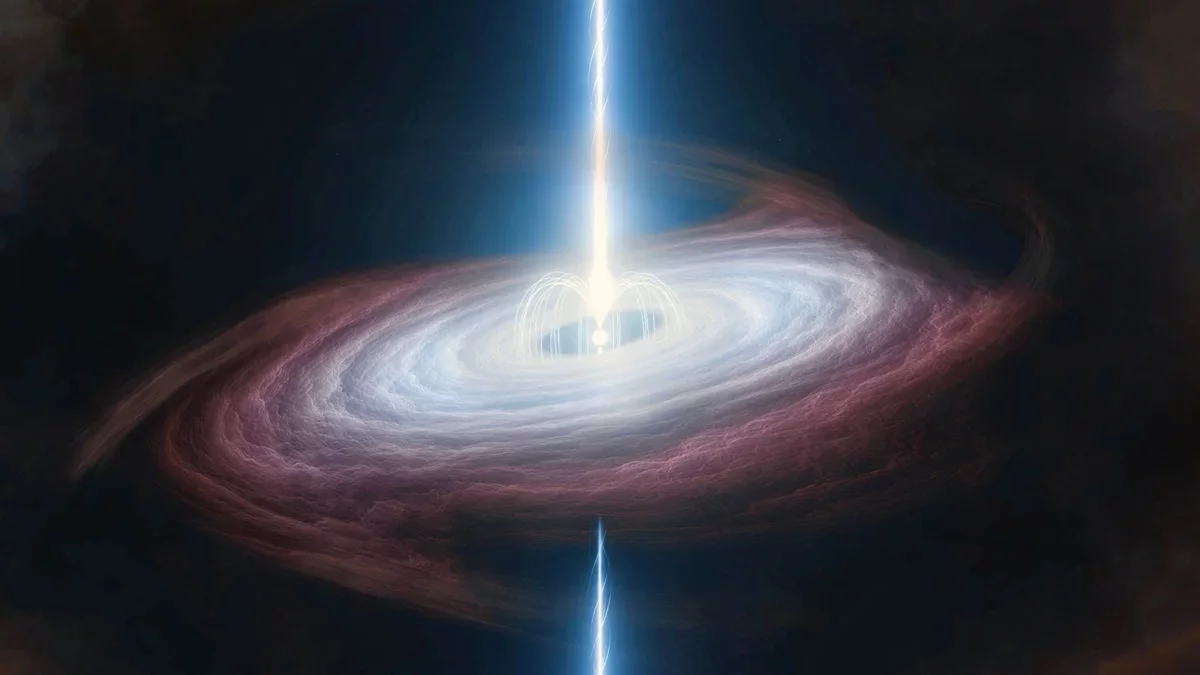
The data revealed that the rhythmic flashes were the first direct evidence linking magnetars--neutron stars with intense magnetic fields--to the extraordinary brightness of certain supernovae. As the dense core of the magnetar spins, its extreme gravitational forces distort space-time, causing a surrounding disk of stellar debris to wobble. This wobbling periodically redirects the intense radiation emitted by the magnetar, resulting in the observed flashes.
A Cosmic Strobe Light
Massive stars culminate their life cycles in spectacular explosions, known as supernovae. Among these, a rare class called Type I superluminous supernovae (SLSNe-I) shines ten to a hundred times brighter than typical supernovae. The energy source behind this immense luminosity has been a topic of heated debate, with many scientists theorizing that magnetars could be the driving force behind such brightness.
Previously, models suggested that the brightness would decline smoothly after the initial explosion. However, astronomers frequently noted unexpected fluctuations in light intensity. The investigation into SN 2024afav revealed at least four distinct sinusoidal modulations, with the interval between flashes decreasing from about 50 days to just 20 days.
Farah described the experience as akin to translating light waves into sound: "It would sound like a deep hum that gets higher and more urgently pitched." The brightness of this supernova was staggering, estimated to be over 100 billion times that of our Sun, rivaling the total luminosity of the Milky Way during its peak.
Twisting the Fabric of Space-Time
Previous assumptions attributed the irregularities in supernova brightness to random interactions with surrounding gas. However, the structured and rhythmic nature of SN 2024afav's flashes necessitated a reevaluation that incorporated Einstein's general relativity. The research team discovered that, during the explosion, a significant amount of material fell back, forming a glowing accretion disk around the newly formed magnetar.
This disk, influenced by the magnetar's rapid rotation, wobbles due to a relativistic effect known as Lense-Thirring precession, akin to a spinning ball dragging a sheet around it. As the supernova fades and the magnetar loses energy, the disk moves closer, causing the frequency of the flashes to increase.
Utilizing the LCO's global network of robotic telescopes, researchers tracked the supernova for over 200 days, successfully predicting the appearance of future flashes based on their observations. This discovery not only confirms the magnetar model as the driving force behind superluminous supernovae but also sets the stage for understanding the mechanics of similar cosmic phenomena in the future.
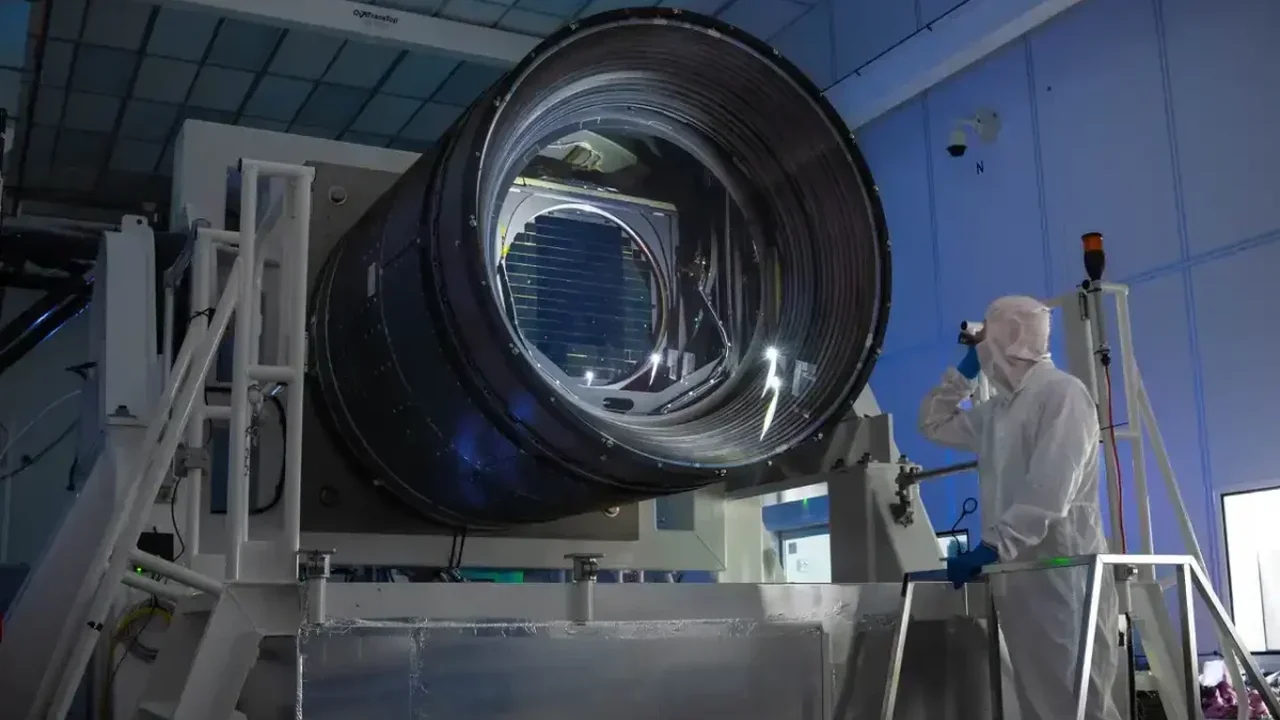
As next-generation observatories like the Vera C. Rubin Observatory prepare to explore the night sky, astronomers are poised to uncover more about these extraordinary cosmic events, enhancing our understanding of the universe and its fundamental processes.