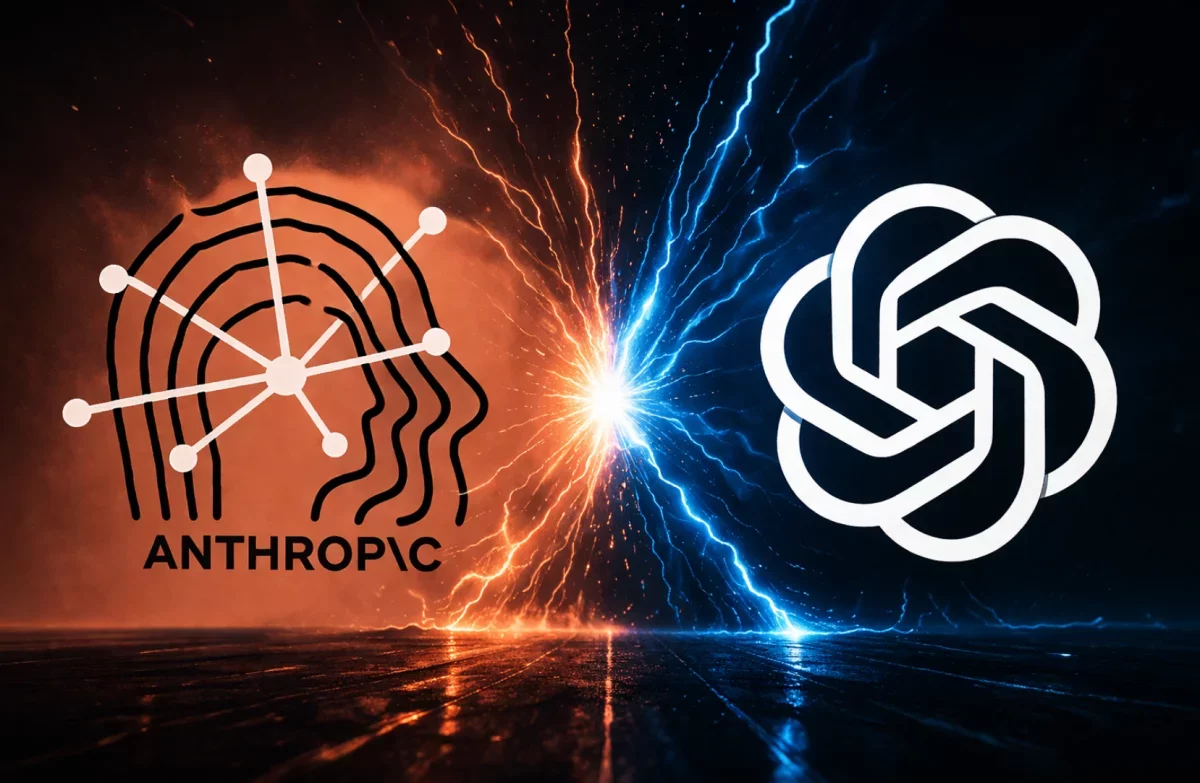
OpenAI's staggering valuation of $852 billion is now under scrutiny from some investors, particularly as the company shifts its focus towards enterprise clients while navigating competition from Anthropic.
Recently, Anthropic's revenue surged from $9 billion in 2025 to an impressive $30 billion by March 2026, primarily fueled by a rising demand for its innovative coding tools. An investor who has supported both companies noted that justifying OpenAI's valuation would necessitate an IPO estimate of at least $1.2 trillion, which casts Anthropic's current valuation of $380 billion in a more favorable light.
The secondary market reflects this trend, showcasing a robust appetite for Anthropic shares, while OpenAI's shares are experiencing a discount in trading. This shift indicates a growing preference for Anthropic among investors.
Sam Altman, OpenAI's CEO, has navigated similar challenges in the past during his leadership at Y Combinator, where inflated valuations left some companies in precarious positions while others thrived. Roy Luo, a partner at Iconiq Capital, which has invested over $1 billion in Anthropic and holds a smaller stake in OpenAI, expressed his views on the competitive landscape. He stated, "There's room for both, but there is fundamentally a number one and a number two dynamic, and the number one will win disproportionately."
In response, OpenAI's CFO, Sarah Friar, defended the company's position, highlighting their record-breaking $122 billion fundraising round as a testament to ongoing investor confidence in OpenAI's future.
This dynamic between the two companies not only illustrates the competitive nature of the AI industry but also emphasizes the potential for innovation and growth within the sector. As these companies continue to evolve, their strategies and investor perceptions could shape the future landscape of artificial intelligence.