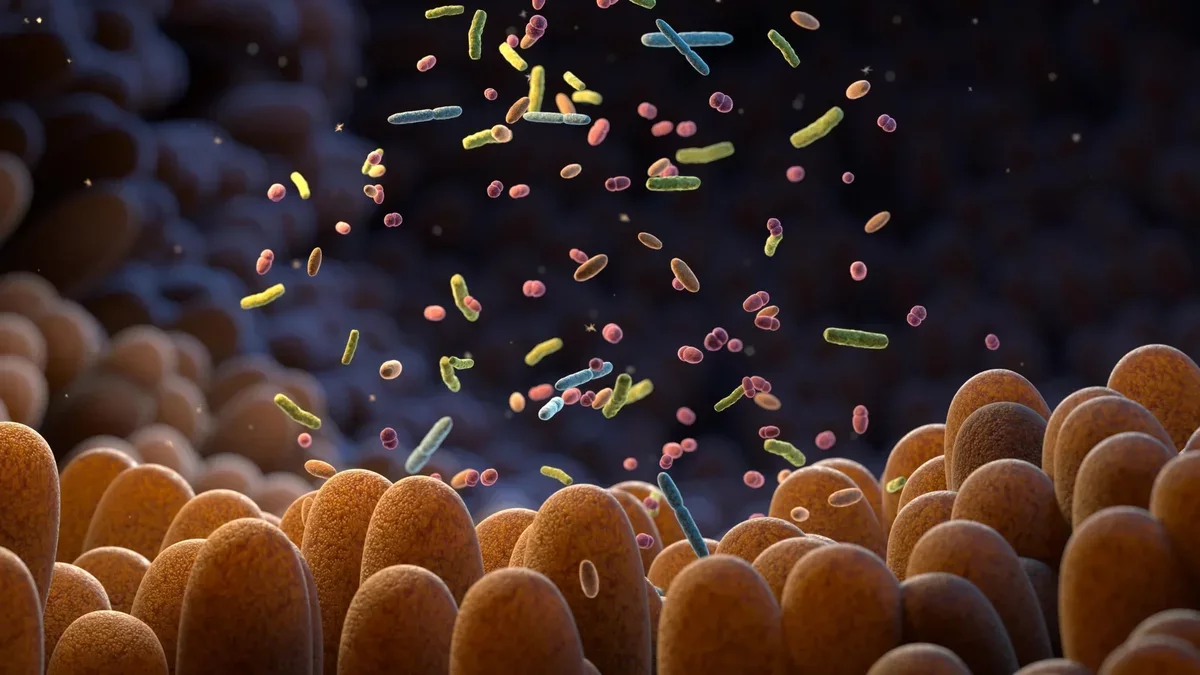
A pivotal question arises: Which chemical signals are most crucial for the beneficial bacteria residing in our gut?
Shifting Focus in Microbiology Research
Historically, the majority of insights into bacterial sensing have stemmed from studies on model organisms, particularly those that cause disease. However, the non-pathogenic, beneficial microbes that inhabit the human body have received significantly less attention. This oversight has led to uncertainties regarding the types of chemical information these advantageous bacteria can detect in their surroundings.
To tackle this issue, an international team of researchers led by Victor Sourjik embarked on a study. This collaborative group included experts from the Max Planck Institute for Terrestrial Microbiology, the University of Ohio, and Philipps-University Marburg, focusing on Clostridia, a group of motile bacteria abundant in the human gut known for their role in promoting gut health.
Gut Bacteria's Nutrient Detection Abilities
The findings revealed that receptors within the human gut microbiome can identify an impressively wide range of metabolic compounds. These encompass breakdown products from carbohydrates, proteins, fats, DNA, and amines. Through systematic screening, the researchers discerned distinct patterns, indicating that various bacterial sensors exhibit unique preferences for specific chemical classes.
This discovery indicates that gut bacteria are not merely reacting randomly to their environment; rather, they are finely tuned to recognize particular metabolic signals.
Key Signals: Lactate and Formate
By integrating laboratory experiments with bioinformatics, the researchers identified several chemical ligands that engage with sensory receptors governing bacterial movement. These receptors play a vital role in helping motile bacteria locate nutrients essential for their growth. The results imply that the movement of these bacteria is largely motivated by the search for nourishment.
Among the tested compounds, lactic acid (lactate) and formic acid (formate) emerged as the most prominent stimuli, suggesting their significance as nutrient sources for gut bacteria.
Cross-Feeding: A Collaborative Effort
Interestingly, some gut bacteria can synthesize lactate and formate, underscoring the importance of 'cross-feeding'. This process involves one bacterial species producing metabolites that other species utilize as food, fostering cooperation that stabilizes the gut ecosystem.
"These domains seem crucial for interactions among gut bacteria and may significantly influence the health of the human microbiome," states Wenhao Xu, a postdoctoral researcher in Sourjik's group and the study's lead author.
Unveiling New Sensory Receptors
Through a comprehensive analysis of various sensors, the team discovered several previously unidentified groups of sensory domains. These newly characterized sensors are specific to lactate, dicarboxylic acids, uracil (a building block of RNA), and short-chain fatty acids (SCFAs).
Additionally, the researchers determined the crystal structure of a newly identified dual sensor that responds to both uracil and acetate, providing insights into how these molecules interact with the sensor at a molecular level. This sensor is part of a larger family of sensory domains with diverse functionalities.
Evolutionary Flexibility
By analyzing the evolutionary relationships between uracil sensors and associated sensory domains, the team found that ligand specificity can adapt relatively easily over time. This adaptability offers insights into how bacteria modify their sensing capabilities in response to environmental changes.
"Our research has greatly enhanced the understanding of the sensory capabilities of beneficial gut bacteria," remarks Victor Sourjik. "To our knowledge, this is the first systematic exploration of the sensory preferences of non-model bacteria inhabiting a specific ecological niche. Moving forward, our methodology can be applied to systematically study sensory preferences in other microbial ecosystems."