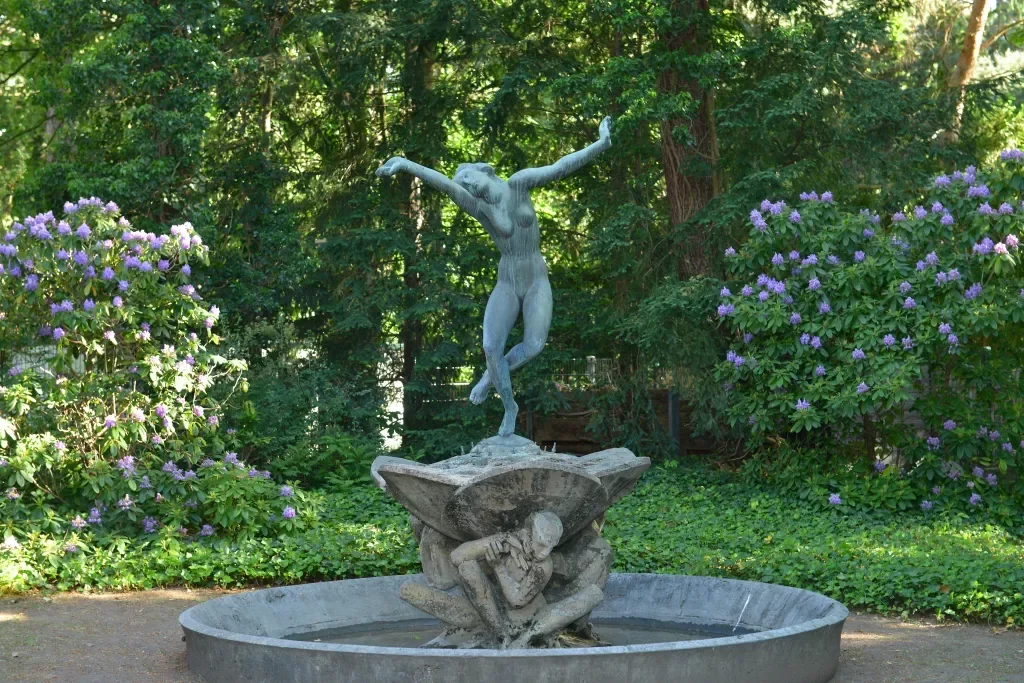
A significant sculpture by the acclaimed German artist Georg Kolbe is set to be removed from its display in Berlin and returned to the descendants of a Jewish family who lost it during the Nazi regime. The artwork, titled Tänzerinnen-Brunnen (Dancers' Fountain), has been a prominent feature of the Georg Kolbe Museum for nearly fifty years. Following a thorough investigation into its provenance, museum director Kathrin Reinhardt confirmed that the piece must be restituted as it is classified as "cultural property looted as a result of Nazi persecution."
The fountain was commissioned in 1922 by a prominent Jewish insurance executive and art collector, Stahl, who later became the head of Berlin's Jewish community. Originally installed in the garden of his villa in the Dahlem district, the bronze sculpture became a cherished centerpiece of the estate.
Kolbe, recognized as one of the leading sculptors of early 20th-century Germany, was known for his dynamic representations of dancers and athletes. The fountain, created during the culturally rich Weimar Republic, showcases Kolbe's signature style, featuring expressive, flowing female figures in harmonious movement around a central basin.
However, the rise of the Nazis in 1933 drastically altered Stahl's life. By 1941, he was compelled to sell both his home and the fountain under duress, receiving far less than their actual worth due to escalating anti-Jewish policies. The museum has labeled this transaction a "persecution-related loss." Shortly after, Stahl and his wife were deported to the Theresienstadt concentration camp, where he tragically lost his life. His widow managed to survive and immigrated to the United States in 1950.
Reinhardt emphasized that the museum views the sale as involuntary and morally unacceptable. She stated, "What was done to Stahl--not only the expropriation itself--is an unforgivable and immeasurable injustice," highlighting that addressing this issue with the heirs has been a priority for the institution.
The decision to return the sculpture follows extensive research into its ownership between 1933 and 1945, a timeframe that has gained increasing attention in German museums. In alignment with the 1998 Washington Principles on Nazi-Confiscated Art, Germany has committed to identifying and returning artworks that were looted or sold under coercion during the Nazi era. This initiative has led to heightened provenance research efforts across the nation, resulting in numerous restitutions.
The Georg Kolbe Museum, located in the sculptor's former studio in Berlin's Westend district, has reached this decision in collaboration with Stahl's descendants. Ongoing discussions are exploring the future of the sculpture, including possibilities for its public accessibility.