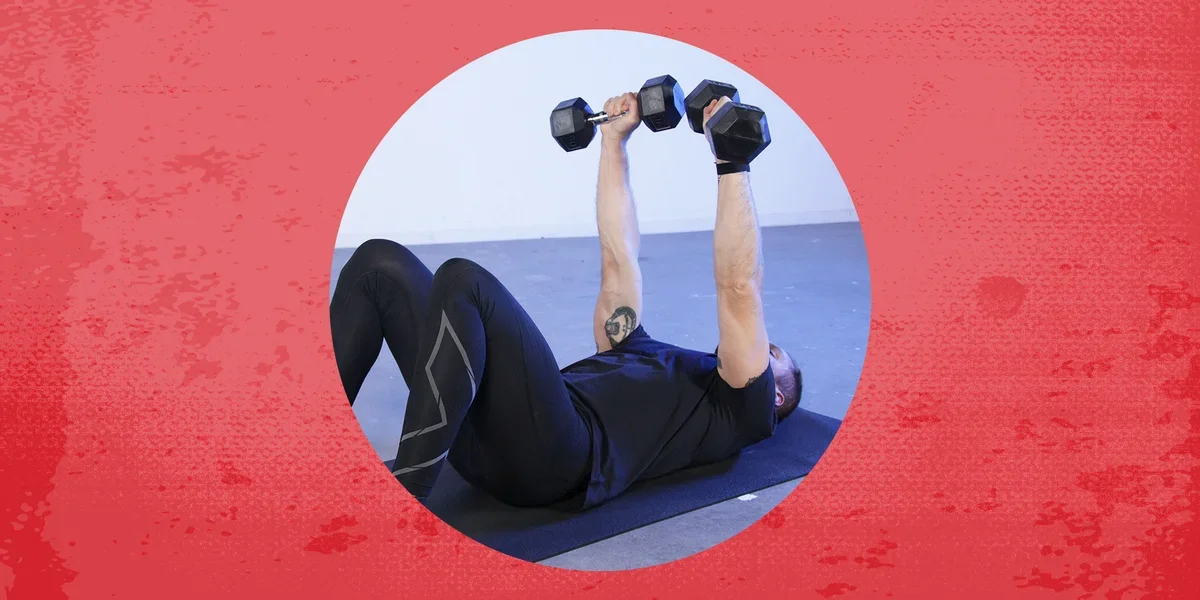
The floor press is gaining attention as a practical upgrade for chest training, especially for lifters who want to build strength while reducing stress on the shoulders. Instead of pressing from a bench, the movement is performed on the floor, which shortens the range of motion and shifts the focus to the upper half of the lift.
Why It Works
By limiting how far the elbows can travel, the floor press helps emphasize the lockout phase of the press. That makes it a useful option for improving bench press performance, while also allowing athletes to handle heavier loads in a more controlled way. The movement primarily targets the chest and triceps, and it can also engage the core when performed from a hollow-body position.
How to Perform It
Start seated on the floor with dumbbells resting on the hips, then roll back and bring the weights to shoulder level. Keep the upper arms angled about 45 degrees from the torso, with the shoulder blades, abs, and glutes engaged. Press the weights upward with control, then lower them slowly until the elbows touch the floor softly before the next repetition.
Key Form Cues
Maintaining full-body tension is essential. Keep the heels grounded, avoid arching the back, and do not bounce the arms off the floor. The descent should be deliberate, while the upward phase should be powerful and explosive. These details help turn the floor press into a precision-based strength tool rather than just another pressing variation.
Training Benefits
Because the floor blocks the bottom portion of the lift, the exercise can be a more shoulder-friendly alternative to the classic bench press. It also offers a strong stimulus for muscle growth and can be programmed as either a primary chest movement or a secondary accessory lift. For heavier work, 3 sets of 8 to 10 reps is a solid starting point; for lighter accessory work, 3 sets of 10 to 12 reps can be effective.
As training methods continue to evolve, exercises like the floor press show how small changes in movement can create smarter, more sustainable strength progress for the future.