Fatherhood in nature can take many forms, and in some species it becomes a striking example of adaptation. While paternal care is relatively rare among mammals, evolution has shaped a few extraordinary fathers that protect, nourish, and guide their young in highly specialized ways.
California Mouse: A Brain Wired for Parenting
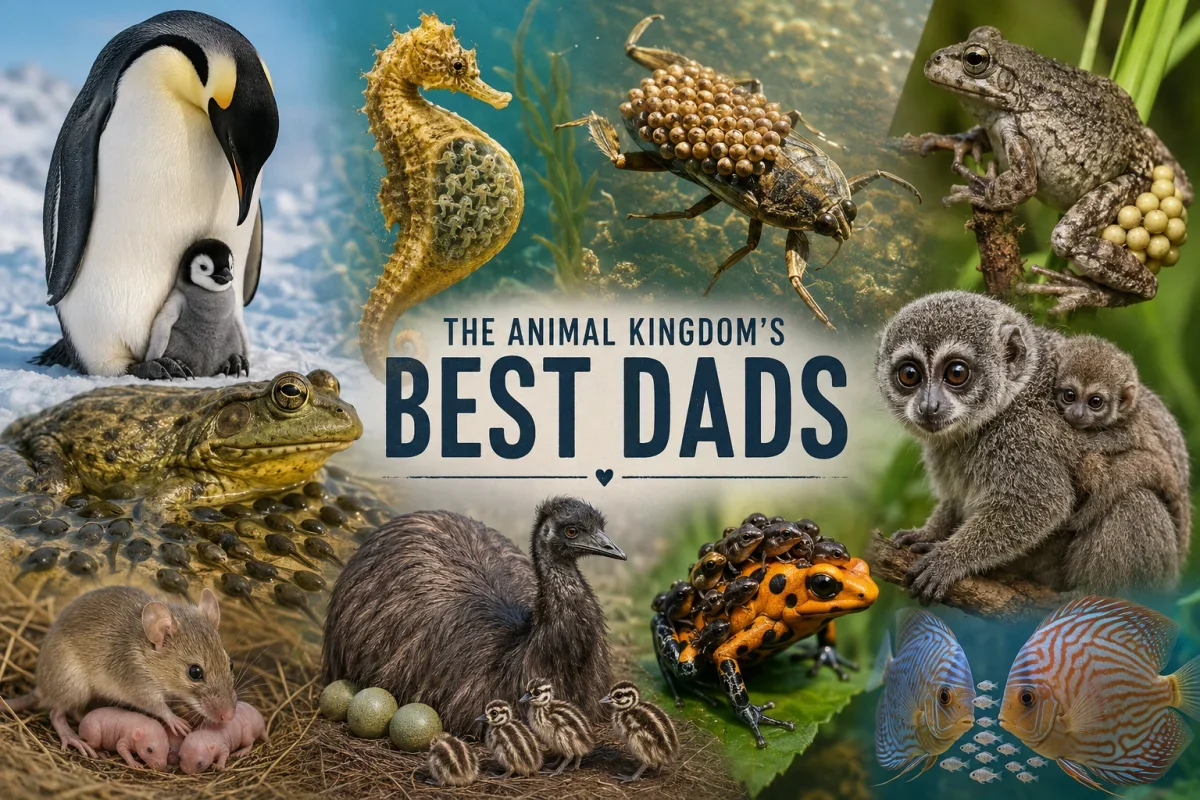
The California mouse stands out for its strong family bond. Research shows that pups are far more likely to survive when the father is present. Male mice also undergo notable brain changes that improve memory, reduce anxiety, and support nest-building and pup care. Even testosterone is redirected to help sustain paternal behavior.
Seahorses and Pipefish: Fathers That Carry the Young
In seahorses, pipefish, and seadragons, males take on pregnancy after females transfer eggs to a specialized brood pouch. That pouch supplies oxygen and nutrients, functioning in a way that resembles a biological nursery. It is one of the most unusual examples of male parental care in the animal world.
Emperor Penguins: Winter Incubators
Emperor penguin fathers remain on Antarctic ice for weeks while balancing a single egg on their feet and keeping it warm beneath a skin fold. During this period, they fast for months and rely on group huddling to endure the cold. If the chick hatches early, the father can even provide a nourishing secretion for the first days of life.
Canids, Bugs, Fish, and Frogs
Across other species, fathers also play essential roles. African wild dogs and wolves help feed pups, giant water bug males carry eggs on their backs, discus fish parents feed their young with skin mucus, and giant bullfrogs may carve channels to move tadpoles to safer water. Poison dart frog fathers transport tadpoles on their backs to small plant pools, while emus, rheas, kiwis, and owl monkeys show that caregiving can be just as important as strength.
From brain rewiring to body-based incubation, these species reveal how flexible parenting can be in the natural world. Their strategies offer a vivid reminder that the future of science often begins with the most inventive forms of life.