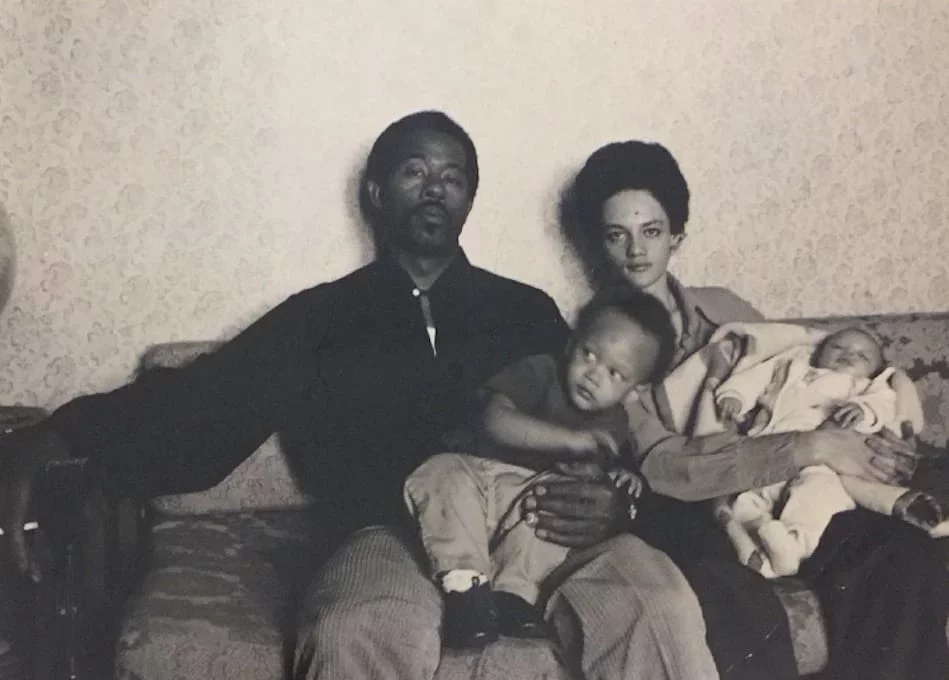
A captivating photograph by Jeffrey Blankfort captures siblings Maceo and Joju Cleaver, children of prominent Black Panther Party leaders Eldridge Cleaver and Kathleen Neal Cleaver. This rare image shows the siblings together in a zebra-print carver chair, a cherished piece of furniture that symbolizes their family's journey.
The chair itself is a notable artifact, reflecting the Cleaver family's aesthetic, which included various African-themed decorations in their San Francisco home during the late 1960s. It serves as a backdrop to significant events in their lives, including the family's eventual relocation to Algiers. The zebra print evokes the iconic imagery associated with the Black Panther Party, particularly a famous photograph of Minister of Defense Huey P. Newton, orchestrated by Eldridge Cleaver during a time of heightened visibility for the Party.
Kathleen Cleaver's reflections on the chair reveal its deeper significance. It was not merely a piece of furniture but a representation of comfort amidst their tumultuous lives. The Cleavers' home was filled with objects that connected them to their African heritage, embodying a longing to bridge the gap between their American experiences and ancestral roots.
In her writings, Kathleen emphasizes the importance of such artifacts in fostering a sense of belonging and identity. The chair, which she had shipped to their new home in Hydra, Algiers, became a symbol of continuity and stability as they navigated the complexities of living in exile. The family's experience in Algeria was marked by cultural contrasts and challenges, yet the chair served as a reminder of their roots and aspirations.
The photograph encapsulates a moment of domesticity amid political upheaval, highlighting the Cleaver family's struggle to create a home filled with love and cultural pride. In this context, the imagery extends beyond mere representation; it invites viewers to reconsider the narratives of Black liberation and the everyday lives of those involved.
As we reflect on the Cleaver family's journey, we recognize the profound impact of such personal histories on the broader narrative of cultural identity and resistance. This exploration of familial bonds and the significance of home underscores the ongoing quest for connection and belonging within the diaspora, offering a visionary perspective on the future of cultural heritage.