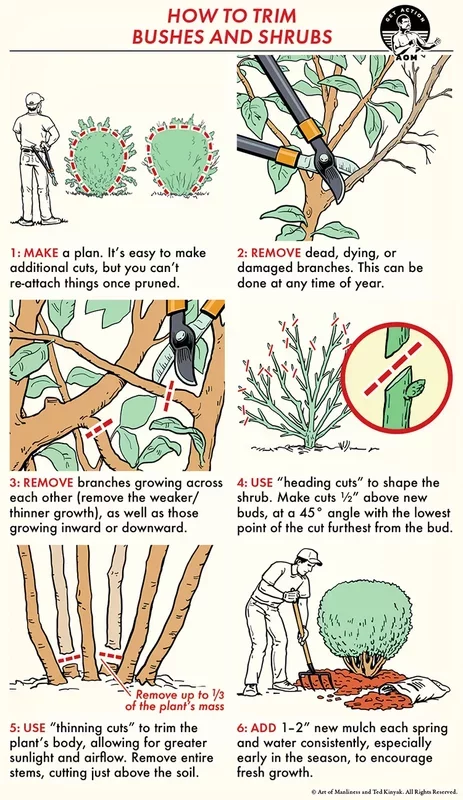
While shrubs can thrive on their own, they often don't grow in the desired manner without proper care. Over time, they may become overgrown and tangled, obstructing sunlight and airflow, which can lead to unhealthy plants and disrupt the intended landscape aesthetic. Regular trimming, ideally once a year, is essential for maintaining their health, balance, and visual appeal. By removing dead or diseased branches and carefully shaping the plant, you promote stronger growth and enhance its lifespan.
For spring-flowering shrubs like lilacs and forsythias, the best time to prune is right after they bloom to avoid cutting off next year's flower buds. In contrast, summer-flowering varieties should be trimmed in late winter or early spring, before the new growth begins. Additionally, any dead or damaged wood can be removed at any time, with prompt action being the most beneficial.
Many homeowners tend to indiscriminately cut back plants for a neat appearance. However, effective pruning involves making intentional cuts that guide the plant's future growth. With a straightforward plan and some basic techniques, you can rejuvenate an overgrown shrub into a healthier and more vibrant specimen.