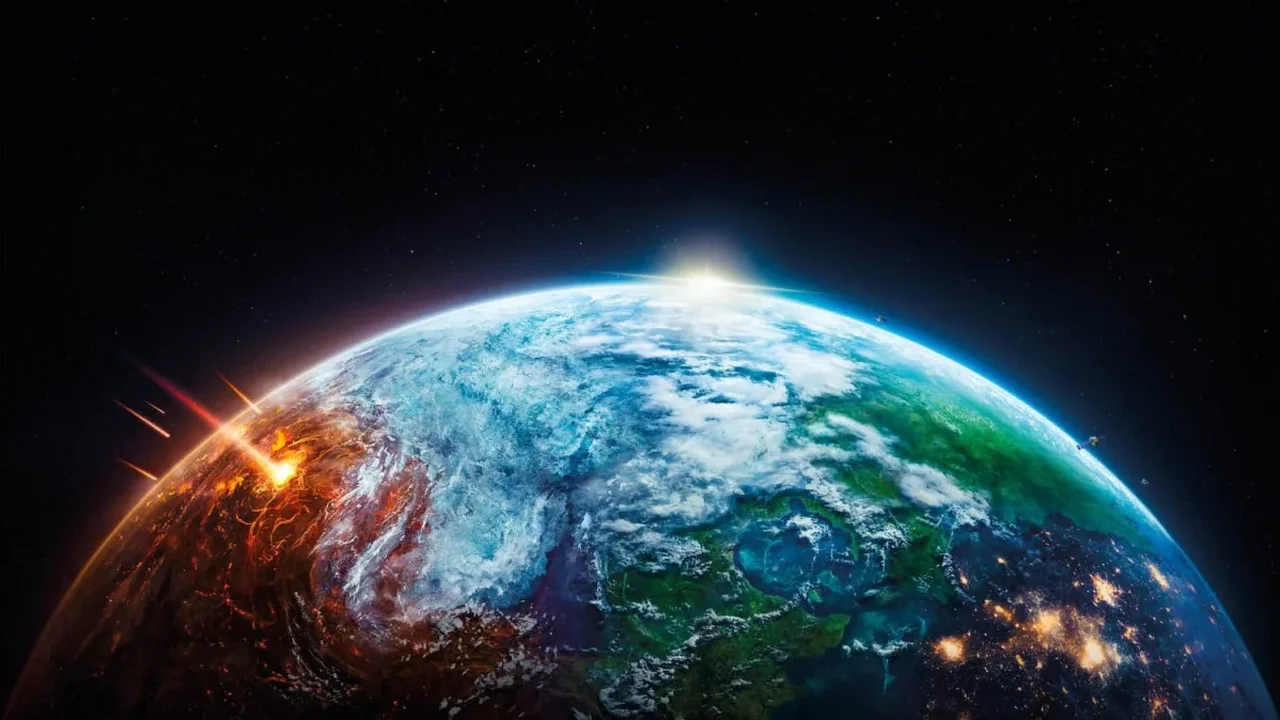
In a remarkable exploration of Earth's geological history, researchers have shed light on a significant gap known as the Great Unconformity. This phenomenon, first noted by geologist John Wesley Powell during his Grand Canyon expedition in 1869, reveals a striking absence of approximately one billion years of Earth's history. This gap is not isolated to North America; it is a global enigma affecting various geological formations worldwide.
Barra Peak, a co-author of a recent study, emphasized the importance of this missing time, stating, "There's more than a billion years that's gone. It's during a key transition in Earth's history, evolving from its ancient past to the modern planet we inhabit today."
Historically, scientists have proposed various theories to explain this vast absence of geological records. One prominent hypothesis, known as the "Snowball Earth" theory, suggested that massive glaciers enveloped the planet around 700 million years ago, eroding the crust and depositing it into ancient oceans. However, a groundbreaking study led by Rong-Ruo Zhan from Northwest University in China challenges this narrative.
A Tectonic Shift in Understanding
The new research posits that the Great Unconformity was primarily shaped by the dynamic processes associated with the formation and disintegration of ancient supercontinents. The team investigated five sites across North China, focusing on ancient basement rocks and employing advanced dating techniques on resilient zircon crystals to decipher the thermal history of these rocks.
The findings revealed that the most significant periods of erosion occurred between 2.1 billion and 1.6 billion years ago, coinciding with the assembly of Columbia, one of Earth's earliest supercontinents. Nicholas Christie-Blick, a professor emeritus at Columbia University and co-author of the study, noted that the tectonic forces involved in forming Columbia were instrumental in pushing large volumes of rock to the surface, which subsequently eroded away.
Multiple Unconformities
This research suggests that rather than a single global event erasing geological history, multiple regional events may have contributed to the Great Unconformity. The study indicates that different regions experienced erosion at varying times, complicating the narrative surrounding Snowball Earth. For instance, evidence from the Grand Canyon shows preserved rock layers from the era when glaciers were thought to be eroding the crust.
As researchers continue to explore these geological mysteries, the implications extend beyond understanding Earth's past. This new perspective on the Great Unconformity may reshape our comprehension of the evolution of complex life, particularly the Cambrian explosion, which was previously thought to be linked to the erosion caused by Snowball Earth glaciers.
In essence, as scientists unveil these hidden chapters of Earth's history, they remind us that the narrative of our planet is as much about what is missing as it is about what remains.