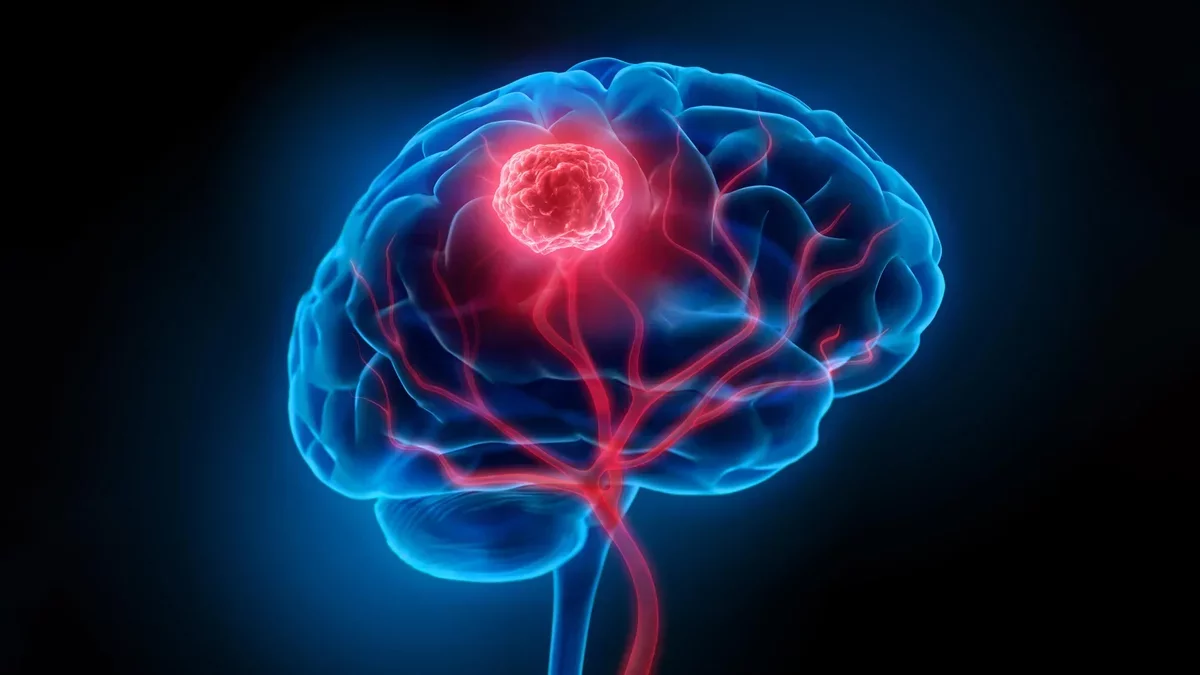
Recent research has unveiled that seemingly normal brain cells can harbor the initial IDH mutation and subtly proliferate throughout the brain's cortex well before a tumor becomes apparent. This hidden phase could elucidate the challenges in treating this type of cancer and opens avenues for earlier detection and prevention of recurrence.
Identifying the Cellular Source of IDH-Mutant Glioma
On January 9th, KAIST revealed that a collaborative research team, led by Professor Jeong Ho Lee from the Graduate School of Medical Science and Engineering and Professor Seok-Gu Kang from Yonsei University Severance Hospital, has pinpointed the cellular origin of IDH-mutant gliomas. Their investigation showed that these tumors emerge from Glial Progenitor Cells (GPCs) present in healthy brain tissue.
Glial Progenitor Cells (GPC): These are normal brain cells that can become the basis for malignant tumors if genetic changes occur.
The researchers conducted a thorough analysis of tumor samples taken during extensive surgical procedures, along with adjacent tissues that appeared healthy. They discovered that cells with the IDH mutation were already present in areas of the brain that looked entirely normal to the naked eye.
Gradual Development of Brain Tumors
This groundbreaking research provides compelling evidence that malignant brain tumors do not emerge spontaneously. Instead, they can begin quietly within normal brain tissue and progressively develop over many years before forming a detectable mass.
To verify the identity of these early mutated cells, the team employed "spatial transcriptomics," an advanced analytical technology that reveals the locations of active genes simultaneously. This method confirmed that the mutation-carrying cells were indeed Glial Progenitor Cells (GPCs) situated in the cerebral cortex.
The researchers also replicated the process in animal models. By introducing the same genetic "driver mutation" found in patients into the GPCs of mice, they successfully recreated critical stages of brain tumor formation.
Different Pathways for Various Brain Cancers
This study builds upon prior research conducted by the same team. In 2018, they reported that IDH wildtype glioblastoma, another aggressive form of brain cancer, originates from neural stem cells in the subventricular zone, which is responsible for generating new brain cells in adults.
The latest findings indicate that while both IDH wildtype glioblastoma and IDH-mutant glioma are malignant brain tumors, they originate from different cell types and begin in distinct brain regions. This emphasizes that brain cancers can follow unique biological pathways based on their subtype.
Implications for Early Diagnosis and Treatment
Professor Seok-Gu Kang, a co-corresponding author, highlighted the significance of this new understanding, stating, "Brain tumors may not initiate precisely where the tumor mass is visible. A targeted approach focusing on the origin cells and their location based on the tumor subtype will provide essential insights for enhancing early diagnosis and preventing recurrence."
Following these findings, Sovagen Co., Ltd, a faculty startup from KAIST, is developing a novel RNA-based treatment aimed at slowing or halting the progression and recurrence of IDH-mutant malignant brain tumors. Concurrently, Severance Hospital is advancing technologies to detect and manage early mutated cells through the Korea-US Innovative Result Creation R&D project.
A Question That Sparked the Discovery
Dr. Jung Won Park, a postdoctoral researcher at KAIST, a neurosurgeon, and the study's lead author, emphasized the collaborative nature of this research. He noted, "This breakthrough was made possible through the integration of KAIST's exceptional basic science research capabilities with the clinical expertise of Yonsei Severance Hospital. The persistent question I asked while treating patients -- 'Where does this tumor originate?' -- was the catalyst for this study."
The findings were published on January 8th in the journal Science.
This research received support from the Suh Kyung-bae Science Foundation, the National Research Foundation of Korea, the Ministry of Science and ICT, the Ministry of Health and Welfare, and the Korea Health Industry Development Institute (Physician-Scientist Training Program).