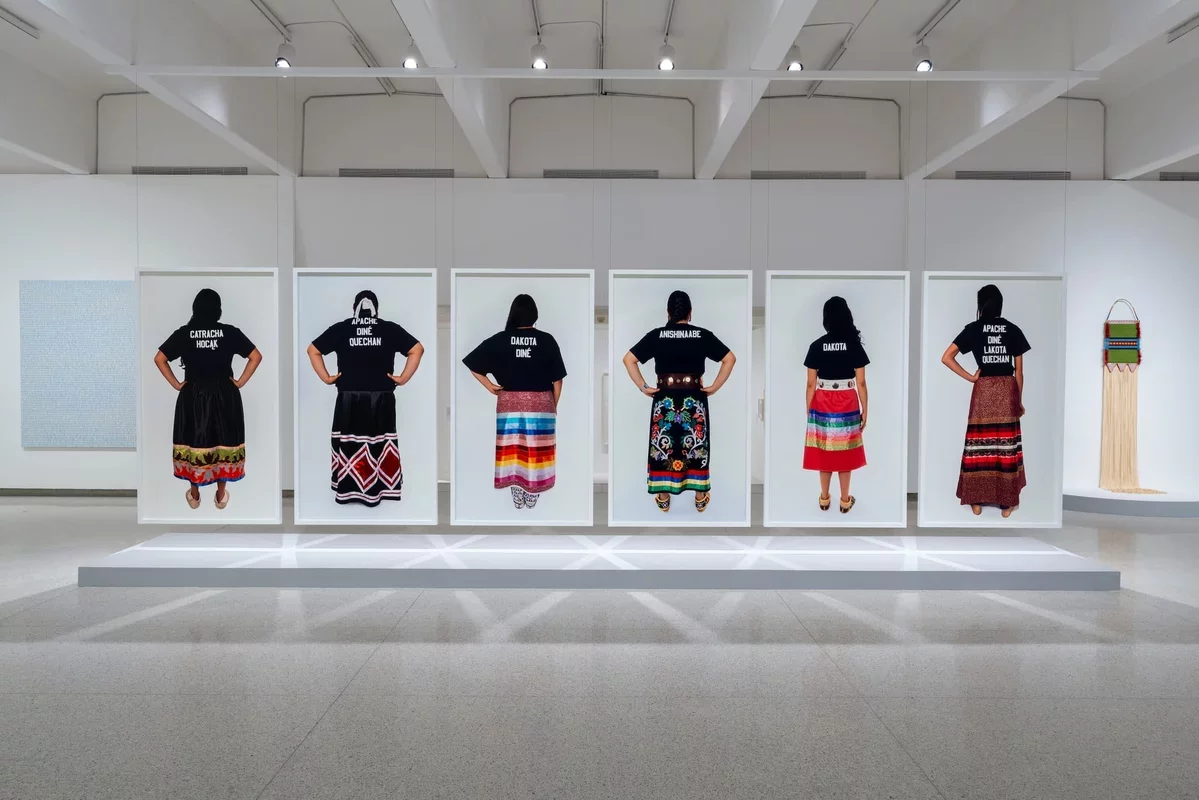
MINNEAPOLIS -- The solo exhibition titled Love Language, featuring the work of Dyani White Hawk (Siʔáŋu Lakota), is currently on display at the Walker Art Center. This Minneapolis-based artist, honored as a 2023 MacArthur Fellow, brings a unique Indigenous perspective to the forefront of contemporary art.
The exhibition is organized into four thematic sections: See, Honor, Nurture, and Celebrate, each serving as both artistic expressions and ethical calls to action. The See section introduces viewers to the rich cultural heritage of Native art, while Honor emphasizes enduring ties to land, lineage, and community. In the Nurture section, visitors can relax on inviting couches adorned with throws and pillows designed by White Hawk, complemented by a video series titled Listen, which showcases Indigenous women sharing their native languages amidst their ancestral landscapes.
Central to White Hawk's practice is the kapéʔmni design, characterized by an X shape formed by two triangles. This foundational Očeti Šakowin (Lakota, Dakota, and Nakota) motif symbolizes the connection between the spiritual and earthly realms, as well as the balance between humanity and nature. This concept is magnificently represented in her 10-foot sculptural piece, Infinite We (2025), which features a conical hourglass shape made from vibrant ceramic tiles and gold grout.
Another highlight in the Celebrate section is the expansive canvas titled Wopila/Lineage, created for the 2022 Whitney Biennial. This artwork, composed of thousands of shimmering glass bugle beads, reflects both light and the collaborative effort behind its creation, as White Hawk involved family and community members in the beading process.
The Walker Art Center emphasizes inclusivity in its curation of Love Language, offering Lakota/Dakota language training for staff and audio guides featuring Native voices. The exhibition's opening ceremony included a drum circle and speakers from the Indigenous community, including White Hawk's mother, author Sandy White Hawk. This cultural experience is a testament to the progress the Walker has made since past controversies, fostering important dialogues in the art world.
As part of its commitment to Native artists, the museum will also unveil A:gajé:gwah dɛsa'ningö:wɛ:nye: (I hope it will stir your mind), a significant work by artist Rosy Simas (Seneca Nation of Indians, Heron clan), on February 12, as part of her two-year residency.
In recent weeks, Love Language has emerged as a vital space for healing amidst the challenges faced by the Minneapolis community. The exhibition serves as a reminder of Indigenous resilience through collective action, offering solace to those navigating difficult times.
This exhibition, which will travel to the Remai Modern in Saskatchewan next, stands as a model for ethical curation that prioritizes Indigenous voices and their complexities.