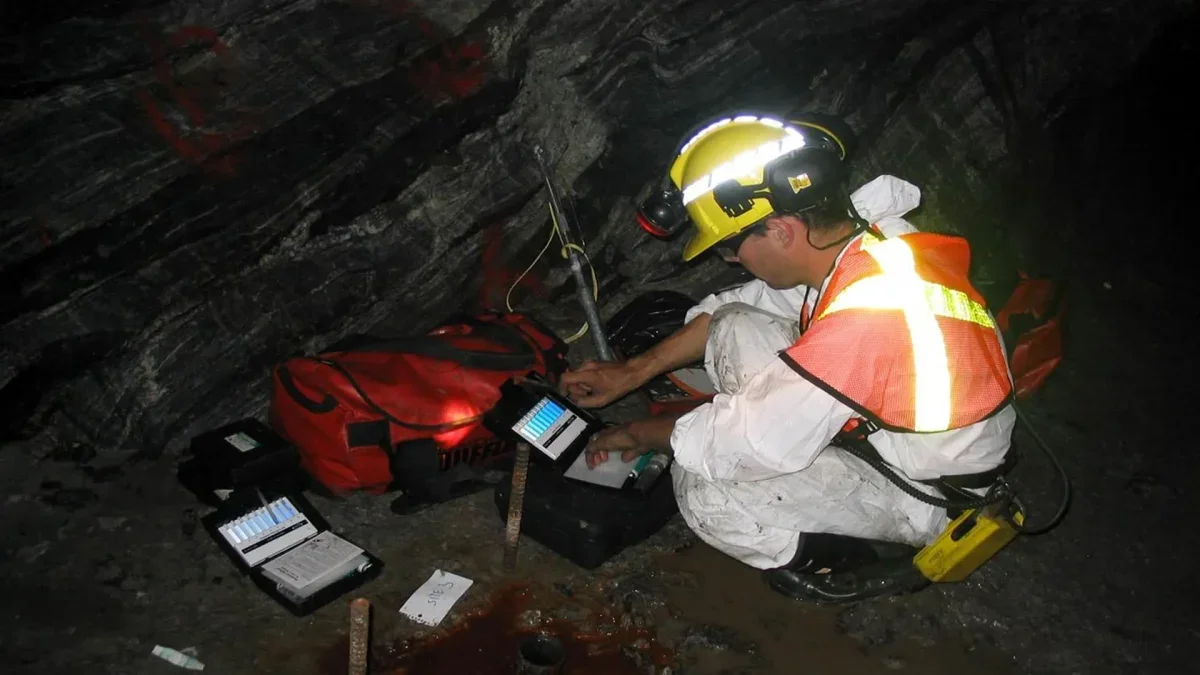
Researchers from the University of Toronto and the University of Ottawa have made a groundbreaking discovery in the Canadian Shield, a region known for its ancient rock formations. For the first time, they have directly measured hydrogen emissions from these billion-year-old rocks, observed its accumulation over time, and mapped areas of gas concentration.
The results, published in the Proceedings of the National Academy of Sciences, may provide insights into the feasibility of using naturally occurring "white" hydrogen as a viable and cost-effective energy source. This research also introduces a novel approach to hydrogen exploration, potentially aiding in the reduction of greenhouse gas emissions and broadening clean energy alternatives.
Hydrogen Emissions Monitored in Ontario Mine Boreholes
The team collected data from an operational mine near Timmins, Ontario, discovering that boreholes drilled into the rock release an average of 0.008 tonnes of hydrogen annually--equivalent to about 8 kilograms, roughly the weight of a standard car battery. Notably, this gas can flow continuously for over a decade.
When considering the site's nearly 15,000 boreholes, the total estimated hydrogen output surpasses 140 tonnes each year. This quantity could generate around 4.7 million kilowatts of energy annually from a single location, sufficient to power more than 400 homes for a year.
"Our findings indicate significant untapped potential for accessing a domestic source of affordable energy derived from the rocks beneath us," stated University Professor Barbara Sherwood Lollar from the Department of Earth Sciences at the University of Toronto, the study's lead author. "This 'made in Canada' resource could support local and regional industries while decreasing reliance on imported hydrocarbon fuels."
The Importance of Natural Hydrogen
Hydrogen currently plays a crucial role in the global economy, valued at approximately $135 billion. It is essential in fertilizer production, which supports agriculture and food supply chains, as well as in methanol production and steel manufacturing.
Traditionally, hydrogen is produced through industrial processes reliant on fossil fuels, such as petroleum and natural gas, which are energy-intensive and emit carbon monoxide and CO2. Even "green hydrogen," created using renewable energy, remains costly and requires complex transportation and storage systems.
Natural hydrogen, however, has been less explored. Prior research primarily focused on its role in underground ecosystems and its potential for astrobiology. The new study offers concrete evidence of sustained hydrogen production over extended periods.
Natural Hydrogen Generation from Ancient Rocks
"Natural hydrogen forms through chemical reactions between rocks and groundwater over time," explained Sherwood Lollar. "Canada's vast territories, particularly the Canadian Shield, are rich in the necessary rocks and minerals to generate this hydrogen."
The researchers believe Canada stands at a unique crossroads, with the potential to produce cleaner, more affordable hydrogen without relying on hydrocarbons. They also note that similar geological formations exist in various countries, indicating that this method could have global applications.
The highest concentrations of natural hydrogen are found in areas already linked to Canadian mining, including Northern Ontario, Quebec, Nunavut, and the Northwest Territories.
"The commonality is the geology," remarked study co-author Oliver Warr, an assistant professor at the University of Ottawa. "Natural hydrogen emerges from the same rocks that host Canada's nickel, copper, and diamond deposits, minimizing the need for extensive transportation and infrastructure for hydrogen."
Benefits for Mining and Northern Communities
The authors of the study assert that natural hydrogen could significantly lower costs and carbon emissions for Canada's mining industry. Local hydrogen production could provide a sustainable energy source without necessitating new transportation systems.
Northern communities, often burdened by high fuel transportation costs, could particularly benefit from nearby hydrogen resources, potentially reducing energy expenses and dependence on imported fuels.
"There is a global push to enhance hydrogen availability to decarbonize and reduce costs in the hydrogen economy," said Sherwood Lollar. "We now possess a clearer understanding of the economic viability of this resource, which can be mapped to hydrogen deposits worldwide, both known and yet to be discovered."