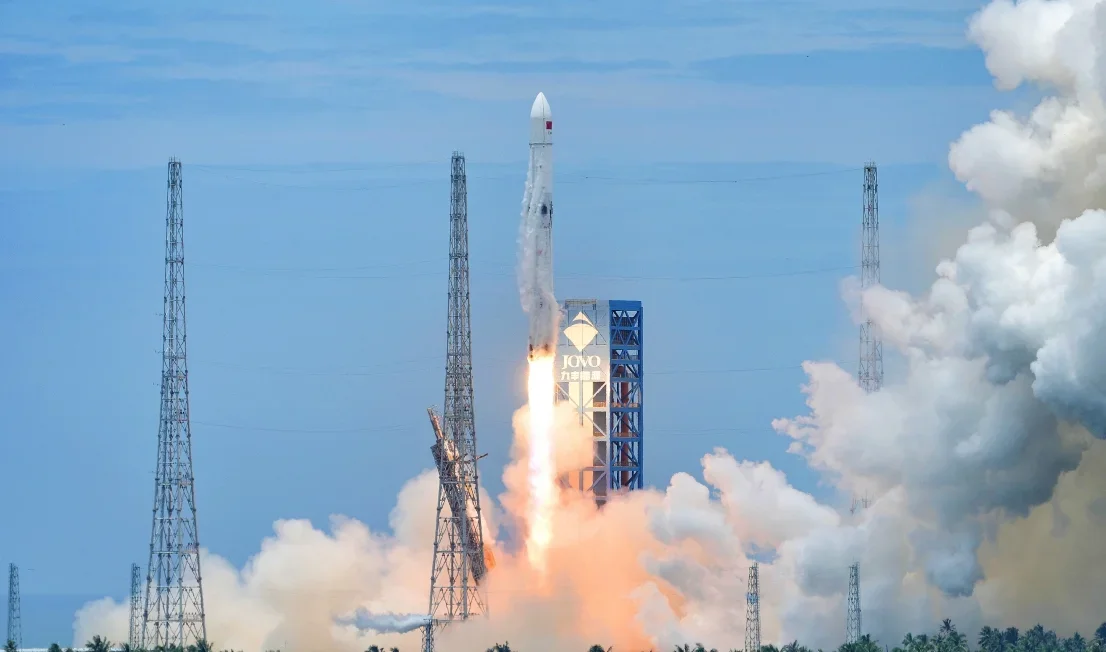
China has taken a major step in reusable spaceflight after a state-owned rocket lifted off successfully and its booster was recovered on a sea-based vessel. The test makes China the second country to demonstrate this capability.
The milestone signals that CASC, China's Aerospace Science and Technology Corporation, is advancing toward a launch model designed to lower mission costs through repeated booster use. The company says it aims to attempt booster reuse by the end of the year.
Unlike the landing-leg method used by other reusable systems, China's approach relies on a net-based recovery setup aboard a ship. That process depends on precise navigation software, advanced sensors, and engines built to restart reliably and withstand reentry conditions.
Reusable boosters have become a defining feature of modern space logistics, supporting faster launch cycles and more affordable access to orbit. China's progress adds momentum to a field already shaped by rapid innovation in satellite deployment and commercial space services.
As reusable launch systems mature, they could reshape the economics of space access and open the door to broader orbital infrastructure in the years ahead.