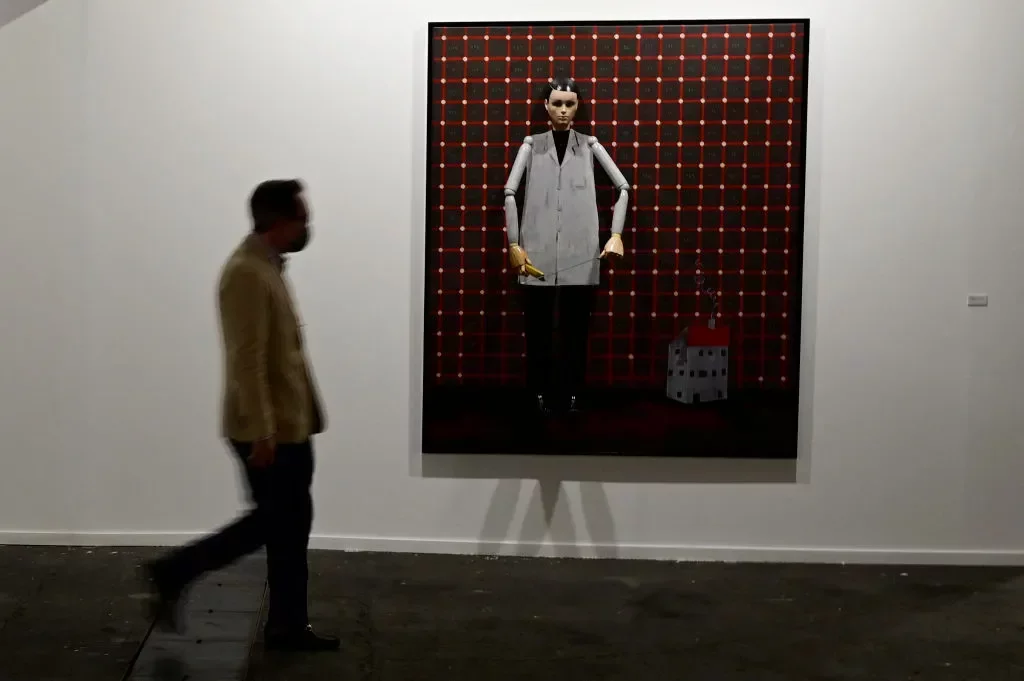
Thomas Zipp, a groundbreaking German artist known for his unique blend of punk sensibility and immersive installations, has left an indelible mark on the art world. His gallery, Berlin's Galerie Barbara Thumm, shared the poignant news of his passing, expressing deep condolences to his family and acknowledging his profound influence on contemporary art.
Zipp's work transformed traditional gallery spaces into psychological theaters, inviting viewers to engage with multilayered installations that explored themes of religion, politics, and history. His environments, often devoid of human presence, encouraged personal interpretation, allowing each encounter to resonate uniquely with the observer.
Born in 1966 in West Germany, Zipp's artistic journey was shaped by the sociopolitical landscape of his time. He studied at the Städelschule in Frankfurt, where he was inspired by his mentor, Thomas Bayrle, to explore the intricate relationship between individual agency and societal structures. Zipp further honed his craft at the Slade School in London, immersing himself in interdisciplinary practices that challenged conventional boundaries.
His artistic palette often reflected the weight of his themes, utilizing colors reminiscent of scars--scorched umber, ash white, and deep blacks. Influenced by Dadaism, Zipp's works were characterized by a radical approach that juxtaposed historical figures in thought-provoking ways. He provocatively connected the legacies of Nobel laureate Otto Hahn and Protestant reformer Martin Luther, challenging audiences to reflect on the complexities of human history.
In his notable 2008 exhibition, "White Dada," Zipp incorporated defaced images and critiqued medical practices, showcasing art's potential to both challenge and conform to societal norms. His thought-provoking installation at the 2013 Venice Biennale, titled Comparative Investigation about the Disposition of the Width of a Circle, further explored themes of psychiatry and the human condition, drawing on literary references to deepen its impact.
Throughout his career, Zipp exhibited at prestigious venues including the Tate Modern and Hamburger Bahnhof, often enhancing his exhibitions with live performances from his musical endeavors. His ability to weave together art and performance underscored his multifaceted approach to creativity.
As we reflect on Thomas Zipp's legacy, his innovative spirit and critical lens remind us of the transformative power of art. His contributions will undoubtedly continue to inspire future generations, encouraging a deeper exploration of the human experience through the lens of creativity.