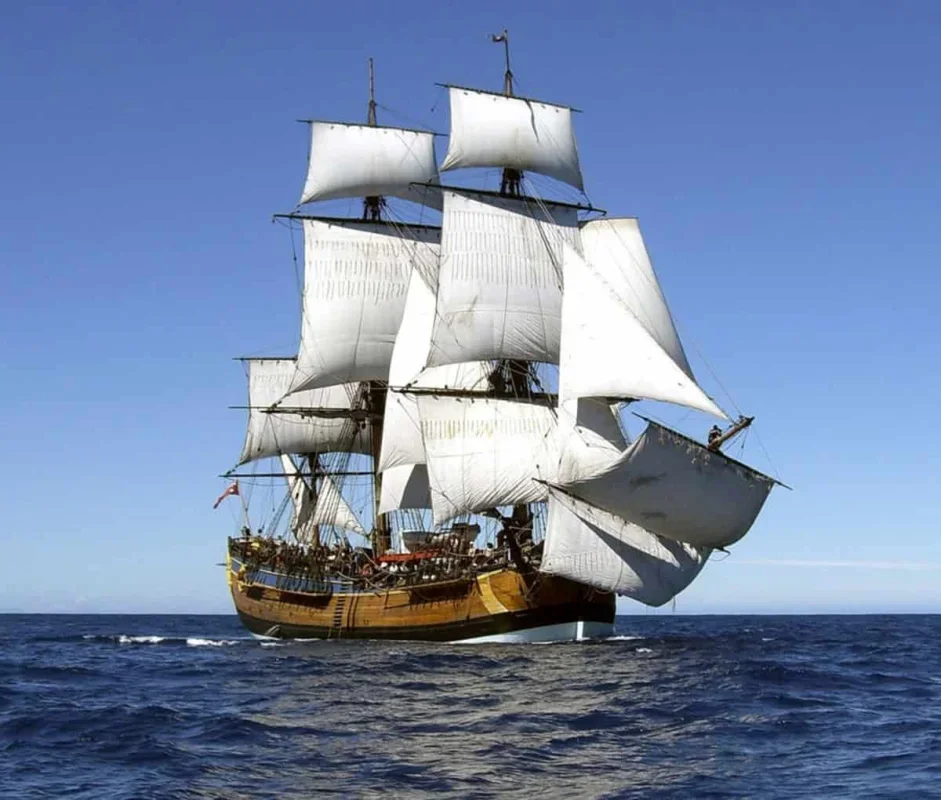
After more than two decades of underwater research, maritime archaeologists in Australia say they have identified the remains of HM Bark Endeavour in Newport Harbor, Rhode Island. The vessel is best known for carrying James Cook on his landmark Pacific voyage in the late 18th century.
A long investigation comes together
The search began in 1999 through a collaboration between the Australian National Maritime Museum and the Rhode Island Marine Archaeology Project. Researchers focused on site RI 2394, comparing its structure with historic ship plans, timber analysis, and excavation records.
Several details strengthened the case: the wreck's size, its British-built white oak and elm timbers, and key structural features such as the pump well and a keel-stem scarph joint. According to the museum, these elements closely match the original design of Endeavour.
A ship with a layered legacy
Launched in 1764 as Earl of Pembroke, the ship was later renamed Endeavour and used for Cook's famous 1768-1771 expedition. That journey helped map parts of the Pacific and Australia's east coast, making the vessel a major reference point in maritime history.
In 1778, after changing hands and serving under the name Lord Sandwich, the ship was deliberately scuttled in Newport Harbor as part of a wartime blockade strategy. The wreck remained unidentified for generations.
The Australian National Maritime Museum says its 2025 final report brings together updated site plans, comparative ship data, and decades of archaeological documentation. While some researchers still prefer caution, the museum says the evidence now forms a strong and consistent case.
Beyond identification, the project also highlights the importance of preserving buried wrecks, which can deteriorate once exposed to open water and marine organisms. The museum has also pointed to the educational value of telling the Endeavour story in full, including both exploration and the wider historical consequences that followed.
As preservation and research continue, the discovery may deepen public understanding of how maritime archaeology can reconnect present-day audiences with pivotal chapters of global history, shaping how the past informs future cultural memory.