Nuclear fusion often evokes images of colossal reactors or extensive arrays of powerful lasers. However, Robin Langtry, co-founder and CEO of Avalanche, believes that a more compact approach could yield better results.
For several years, Langtry and his team at Avalanche have focused on developing a desktop version of nuclear fusion technology. "By leveraging a smaller scale, we can learn and iterate more rapidly," Langtry shared in a recent interview.
The promise of fusion power lies in its potential to deliver vast amounts of clean energy, provided that researchers can overcome significant technical hurdles. Essentially, fusion aims to replicate the Sun's energy production by heating and compressing plasma until atomic particles fuse, releasing energy.
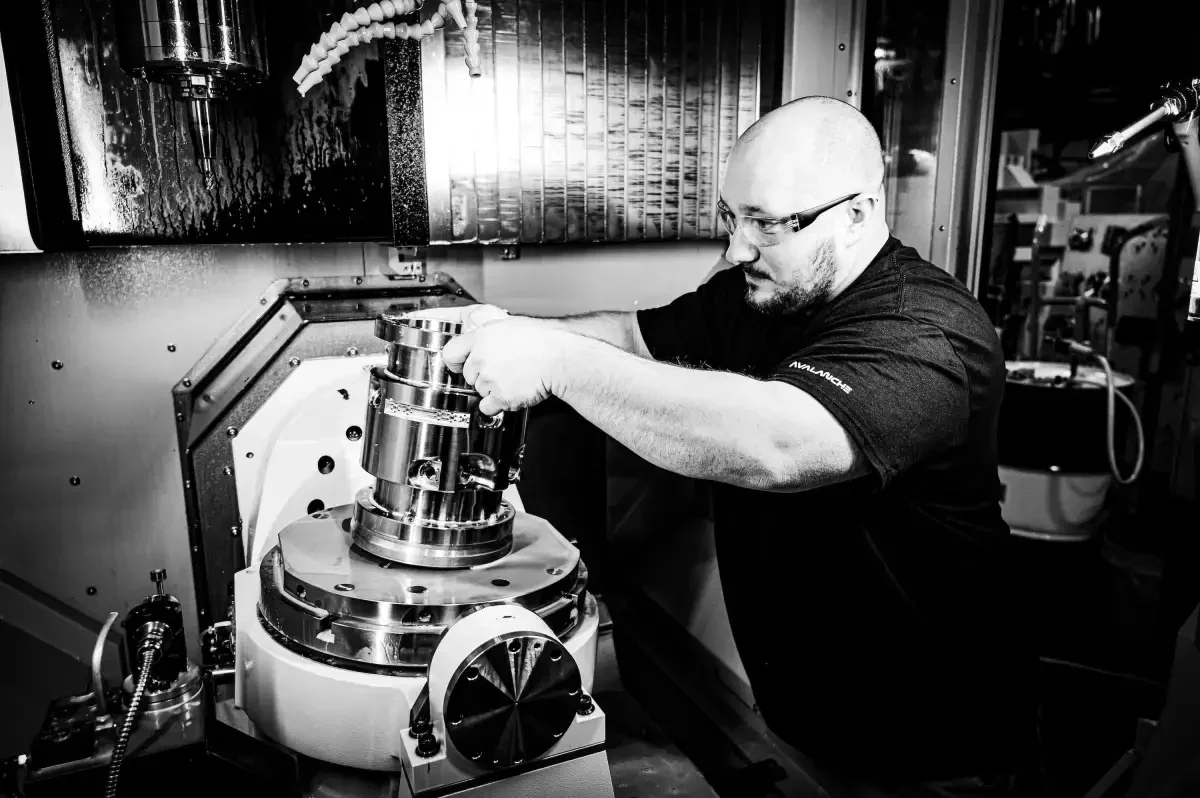
The fusion sector is notoriously challenging, with complex physics, advanced materials science, and enormous power demands. Precision machining of components is essential, and the large scale of typical projects often hampers quick experimentation.
While some companies, like Commonwealth Fusion Systems, utilize large magnets in a doughnut-shaped tokamak to confine plasma, Avalanche employs high-voltage electric currents to create orbits for plasma particles around an electrode. This method, complemented by some magnets for stability, allows particles to accelerate and collide, initiating the fusion process.
This innovative approach has attracted investors, with Avalanche recently securing an additional $29 million in funding led by R.A. Capital Management, along with contributions from several prominent venture firms. To date, the company has raised a total of $80 million, a modest sum in the fusion landscape where competitors have amassed hundreds of millions to billions.
Inspiration from Space Technology
Langtry's experience at Blue Origin, a space technology company backed by Jeff Bezos, has significantly influenced Avalanche's strategy. "Adopting a 'new space' mindset allows for rapid iteration and problem-solving," he explained, noting his collaboration with co-founder Brian Riordan at Blue Origin.
By opting for a smaller reactor, Avalanche has accelerated its development process, conducting device modifications as frequently as twice a week--an endeavor that would be prohibitively expensive with larger systems.
Currently, Avalanche's reactor measures just nine centimeters in diameter, but plans are underway for a new version that will expand to 25 centimeters, targeting an output of approximately 1 megawatt. Langtry emphasized that this advancement will enhance confinement time and improve the chances of achieving a fusion ratio greater than one, a critical threshold in fusion technology.
These experiments will take place at Avalanche's FusionWERX, a commercial testing facility that also serves other companies in the sector. By 2027, the facility is expected to be licensed for tritium handling, an essential fuel isotope for many fusion ventures aiming to contribute to the energy grid.
While Langtry refrained from specifying a timeline for when Avalanche might achieve net positive power generation, he believes the company is on a trajectory similar to competitors like CFS and Helion. "We anticipate significant advancements in fusion technology between 2027 and 2029," he stated.