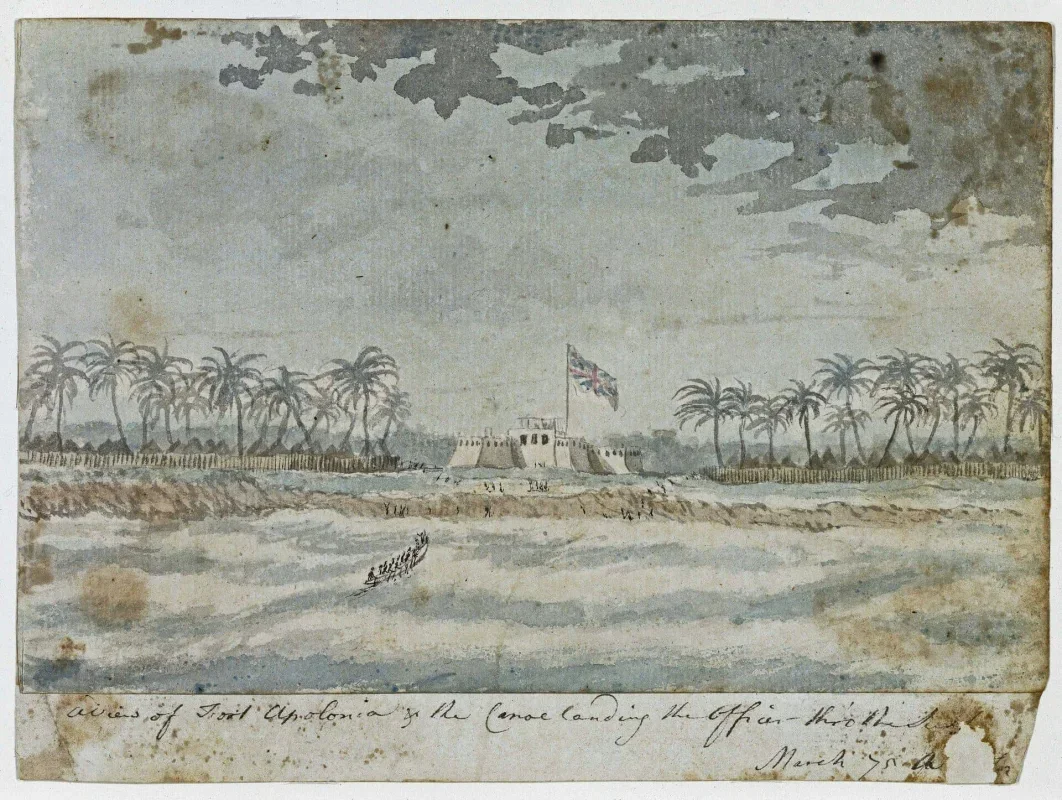
New historical research is drawing attention to Appolonia, a kingdom in today's southwestern Ghana that followed a markedly different path during the Atlantic slave trade. While nearby ports such as Elmina, Cape Coast, and Anomabo became major export hubs, Appolonia shipped only 352 enslaved people across four centuries.
The kingdom, also known as the Nzema State, was an Akan society positioned near the border with Côte d'Ivoire. It emerged in the late 1600s from a cluster of villages and later became part of the wider Gold Coast world shaped by trade, state-building, and Atlantic commerce. Yet Appolonia did not evolve into a major slaving center.
According to the study, the kingdom's economy was more closely tied to gold and ivory than to human trafficking. Researchers also point to the amonle covenant, a sacred oath that protected Appolonian subjects and refugees from being sold. This ritual helped limit the internal supply of captives and set Appolonia apart from neighboring coastal regions.
The contrast is striking. In the 18th century, Anomabu exported more than 168,000 captives, while Cape Coast and Elmina also recorded very high numbers. Appolonia's total remained tiny by comparison, making it a rare statistical outlier in the Atlantic system.
The findings also add nuance to current discussions about historical justice and reparations. Appolonia's case shows that African societies experienced the slave trade in different ways, and that local policies could shape outcomes even within a brutal global economy.
As scholarship continues to revisit the geography of the Atlantic world, stories like Appolonia's may help build a more precise understanding of resistance, agency, and memory in African history -- with lessons that could inform future debates on justice and heritage.