Recent research published in PNAS highlights a groundbreaking collaboration between experimental and theoretical physicists at Emory University. By integrating a custom neural network with laboratory data from a dusty plasma, the team has demonstrated that artificial intelligence can transcend traditional data analysis and prediction, revealing entirely new laws of physics.
"We have successfully utilized AI to discover new physics," states Justin Burton, an Emory professor of experimental physics and senior co-author of the study. "Our AI approach is transparent; we comprehend its mechanisms and applications. This framework is universal, with the potential to be adapted to various many-body systems, paving new paths for discovery."
Precision Insights into Dusty Plasma Dynamics
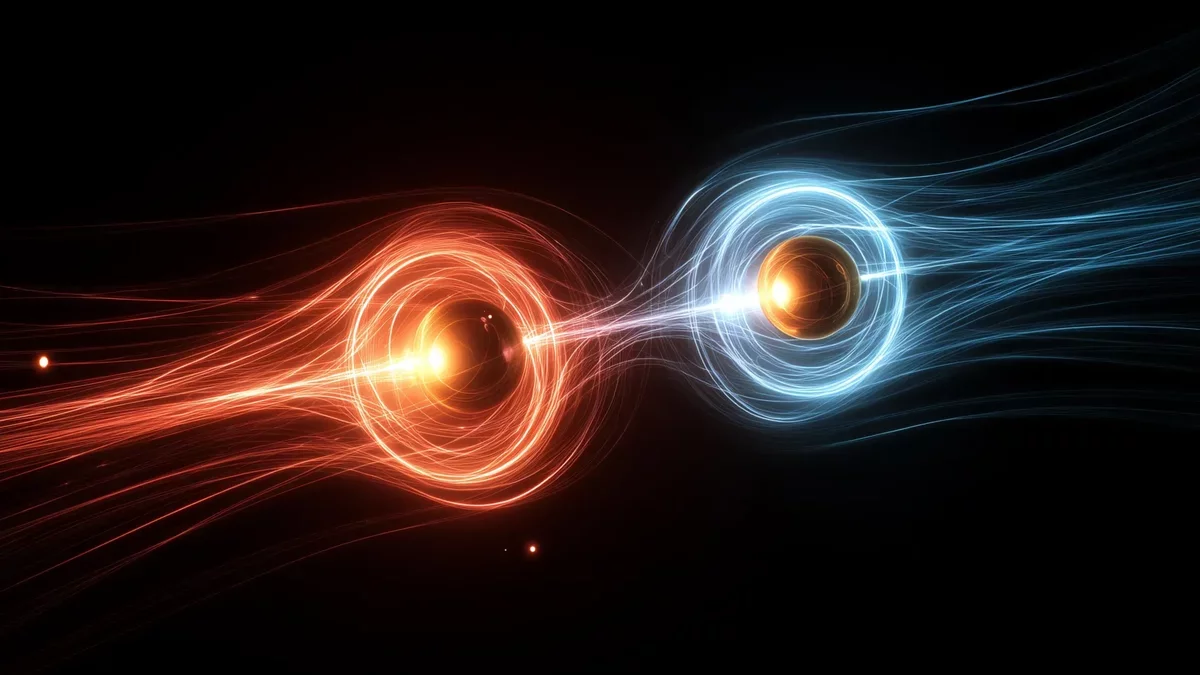
This study provides one of the most comprehensive examinations of the physics governing dusty plasma, a system characterized by ionized gas containing interacting charged particles, including minute dust grains. The researchers' AI model achieved over 99% accuracy in describing non-reciprocal forces, which have historically been challenging to quantify and model.
"We can articulate these forces with remarkable precision," comments Ilya Nemenman, an Emory professor of theoretical physics and co-senior author of the paper. "Interestingly, our findings challenge some established theoretical assumptions about these forces, allowing us to correct inaccuracies through detailed observation."
The research team envisions this method's broad applicability to various systems composed of multiple interacting components, spanning from industrial materials like paint and ink to cellular groups.
The study's lead author, Wentao Yu, now a postdoctoral fellow at the California Institute of Technology, contributed alongside co-author Eslam Abdelaleem, who is now a postdoctoral fellow at Georgia Tech.
Supported primarily by the National Science Foundation, with additional backing from the Simons Foundation, the research exemplifies interdisciplinary collaboration. Vyacheslav (Slava) Lukin, program director for the NSF Plasma Physics program, notes, "This project illustrates how advancements in plasma physics and AI could further enhance our understanding of complex living systems."
Understanding the Fourth State of Matter
Plasma, often referred to as the fourth state of matter, consists of ionized gas, where electrons and ions move freely, resulting in unique properties like electrical conductivity. It constitutes approximately 99.9% of the visible universe, from solar winds to lightning.
Dusty plasma, enriched with charged dust particles, is prevalent in various environments, including Saturn's rings and Earth's ionosphere. On the Moon, for instance, weak gravity allows charged dust to hover, explaining why astronauts' suits become dust-laden.
Tracking Particle Motion in 3D
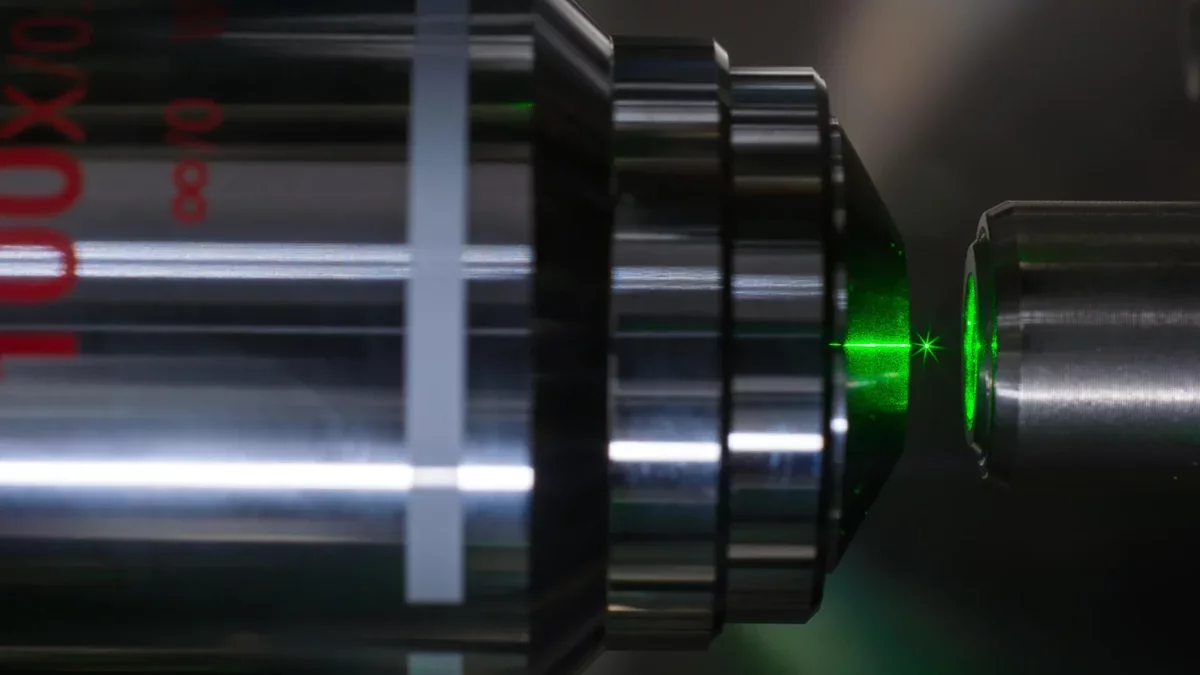
Burton's lab investigates dusty plasma by recreating it in controlled settings. Researchers suspend tiny plastic particles in a plasma-filled vacuum chamber to simulate more complex systems, adjusting gas pressure to replicate real-world conditions. The team developed a tomographic imaging method to observe 3D particle motion, utilizing a laser sheet and high-speed camera to capture and reconstruct particle trajectories.
AI's Role in Understanding Collective Motion
Nemenman explores how complex systems emerge from simple interactions, particularly in biological contexts. "Understanding how collective motion arises from individual interactions is crucial," he remarks, emphasizing its relevance in fields such as cancer research.
The AI model's development required meticulous planning, as the project had limited experimental data. The team refined the neural network's design over a year, ensuring it could learn from minimal data while exploring unknown physics.
Revolutionary Insights and Future Implications
After training on 3D particle trajectories, the AI successfully captured complex interactions, revealing insights that challenge long-held theories about particle behavior. The researchers believe their physics-based neural network, operable on standard desktop computers, offers a versatile framework for studying many-body systems across various disciplines.
As Nemenman prepares to teach at the Konstanz School of Collective Behavior in Germany, he aims to inspire future scientists to harness AI for exploring the physics of collective motion in living systems. Burton expresses optimism about AI's potential, stating, "If used correctly, AI can unlock new realms of exploration, echoing the Star Trek motto to boldly go where no one has before."