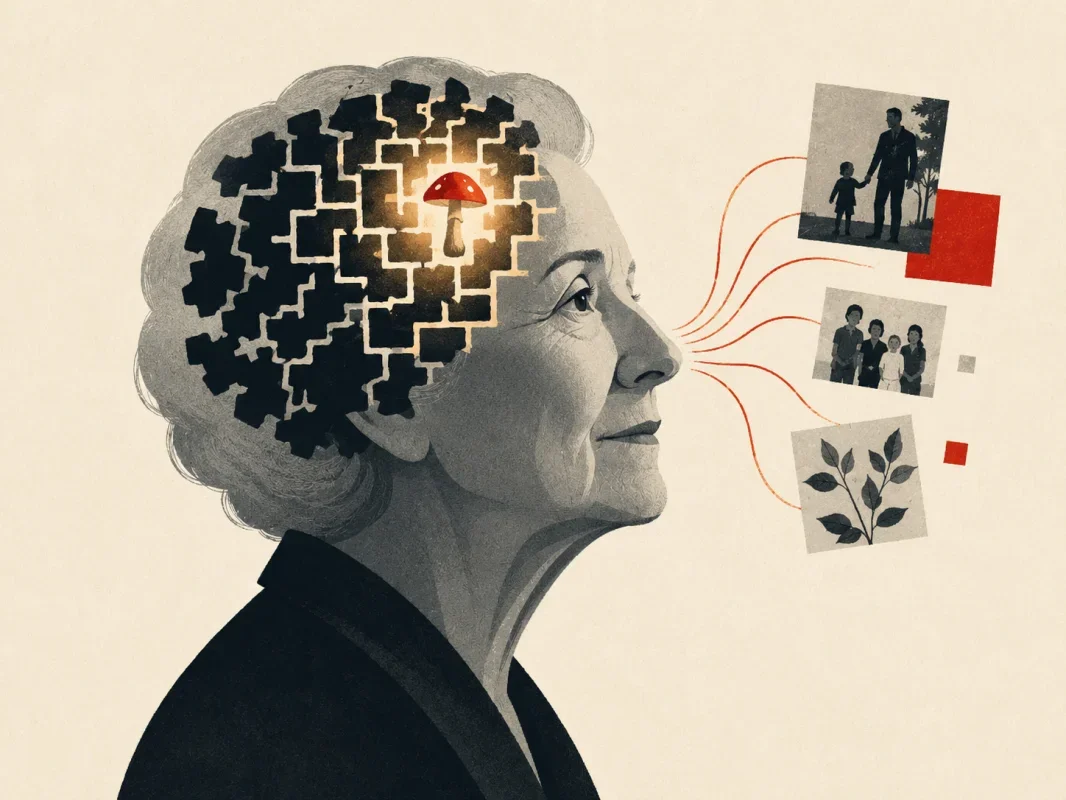
A striking case report has added fresh momentum to research on psychedelics and the brain. A Japanese-American woman in her 80s, living with advanced Alzheimer's disease for about a decade, reportedly regained spontaneous speech after receiving a high dose of psilocybin-containing mushrooms.
Before the session, she had largely stopped speaking for five years and needed help with walking, eating and dressing. According to the report published in Frontiers in Neuroscience, she was given 5 grams of Enigma strain mushrooms. About 19 hours later, she woke from a long, sleep-like state and began talking about her life for several hours.
Caregivers then observed changes that stood out in daily routines. She recognized family members, walked on her own by the second day, dressed herself, and showed more eye contact, smiling and social engagement. A month later, she received a second supervised 3-gram dose. During that session, the researchers said she described peaceful imagery and showed more humor, expression and physical ease.
The authors stress that the findings do not prove Alzheimer's reversal. The case was not backed by biomarkers, brain imaging or standardized cognitive testing, and it involved only one patient. Still, it raises an intriguing question: could some abilities in advanced neurodegeneration remain dormant rather than fully lost?
Psilocybin is converted in the body into psilocin and acts on serotonin pathways, including the 5-HT2A receptor, which helps shape communication across brain networks. Scientists have been studying the compound for depression, anxiety and end-of-life distress, with early imaging work suggesting it can temporarily loosen rigid patterns of brain activity.
For now, the case is best seen as a scientific signal rather than a treatment model. If larger studies confirm similar effects, research on psychedelics could open a new chapter in brain health and age-related care.