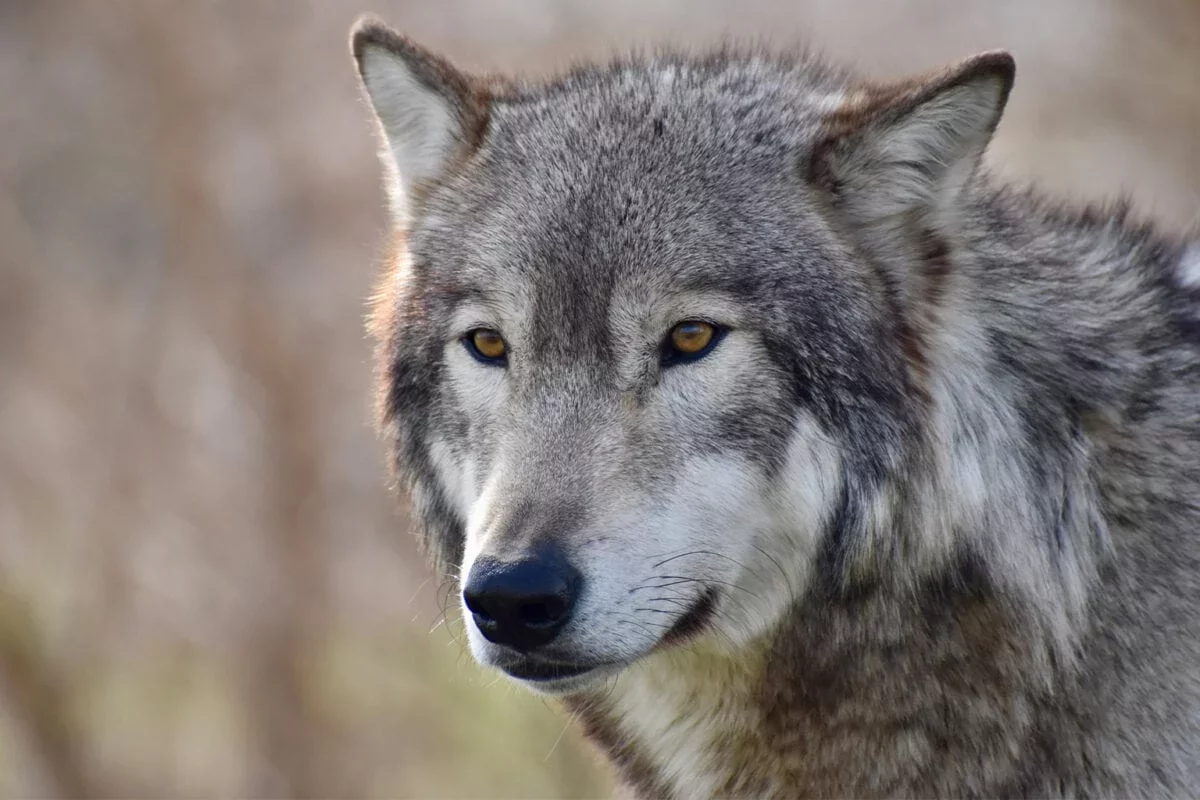
In a remarkable display of adaptability, a male wolf known as M637 recently undertook an extraordinary swim across Lake Lucerne in Switzerland, covering approximately 1.5 kilometers through near-freezing waters. This daring decision came in February, when the lake's temperature hovered around a chilling 5°C, a condition perilous enough for most animals.
Equipped with a GPS collar, M637's journey was meticulously tracked, revealing his audacious route. Initially, researchers speculated that the wolf may have circumvented the lake, but the data confirmed his bold swim across the icy expanse. Biologist Flurin Kunz, from the Kora Carnivore Ecology and Wildlife Management Foundation, remarked on the unexpected nature of M637's choice, highlighting that a full circuit around the lake would have been unfeasible within the time frame observed.
The Adventurous Spirit of M637
Since being fitted with the GPS collar in October 2025, M637 has been the subject of a study aimed at understanding wolf migration and their interactions with livestock. As a young adult male, he is naturally inclined to explore new territories, a behavior essential for genetic diversity among wolf populations.
Initially roaming the Jura region near the French-Swiss border, M637's explorations became increasingly ambitious. In just 11 days, he traversed nearly 240 kilometers, navigating through a landscape of farms, highways, and human settlements before facing the challenge of Lake Lucerne.
While many would opt for the safer route around the lake, M637 demonstrated remarkable determination by choosing to swim. This feat, while modest compared to marine mammals, posed a significant challenge for a wolf in such frigid conditions.
Wolves: Underestimated Swimmers
Wolves are not typically recognized for their swimming prowess, yet they possess strong swimming abilities. Their large paws enable efficient movement through water, while their dense fur provides insulation. Research indicates that wolves can swim considerable distances, as evidenced by coastal populations in British Columbia that routinely navigate between islands.
M637's swim highlights the adaptability of wolves even in environments heavily influenced by human activity. This adaptability can inform conservation strategies in Europe, where wolves are gradually reclaiming their habitats. Understanding M637's journey underscores the need for wildlife managers to recognize that barriers like lakes or highways may not deter these resilient creatures.
Implications for Conservation
As M637 continues his journey, he is not just a solitary wanderer but a vital part of a broader ecological narrative. Between late January and early March, he covered approximately 739 kilometers, indicative of a dispersing wolf searching for territory or a mate. His movements reveal the essential connectivity needed for wolf populations to thrive.
Ultimately, M637's journey serves as a powerful reminder of the resilience of wildlife and the importance of maintaining connected habitats. As we observe such remarkable feats, we gain insights that can shape future conservation efforts, ensuring that these majestic creatures continue to roam freely in our landscapes.